Category: Brunch

  • Vada Ghugni

    Who doesn’t love street food! I know I do, as I am sure a zillion other people around the world do too. Street foods are fascinating. They are such a cultural thing, they are almost an opening into the world of a particular culture’s food. A lot of street food is made by non-trained cooks who use family recipes from generations to prepare and sell food to make a decent living. Yet, there lie some of the best secrets to ingredients and cooking techniques that the street food vendors have inherited from their families that are reflective of their cultures and traditions.

    For me, exploring street foods is a must whenever I visit a new city, whether it is in India or any other city around the world. When it comes to India, there is such incredible variety across the states that even a lifetime is not enough to explore them all. But at least I can try 🙂

    Vada Ghugni (Or Bara Ghugni) is a popular street food in eastern Indian states such as West Bengal and Orissa. But, first, what is it? Bara or Vada is exactly what it says, a regular Urad Dal Vada. Ghugni is interesting, because at first I thought it was just a regular Chole/Channa Masala. But in exploring different recipes, I learnt that the Ghugni is different not just in the spices it uses but also that is has Potatoes in it, and the key difference being that Ghugni uses dried white or yellow peas (or even Kala Channa [Brown Chickpeas] in states like Bihar and Jharkand) that are soaked and cooked.

    Did you know white peas and chickpeas are not the same?

    White peas (called safed [white] vatana in hindi) are essentially peas that are dried after harvesting and their skins are removed. They work as substitute for fresh green peas. they are typically boiled, cooked and used for dal or in chaats.
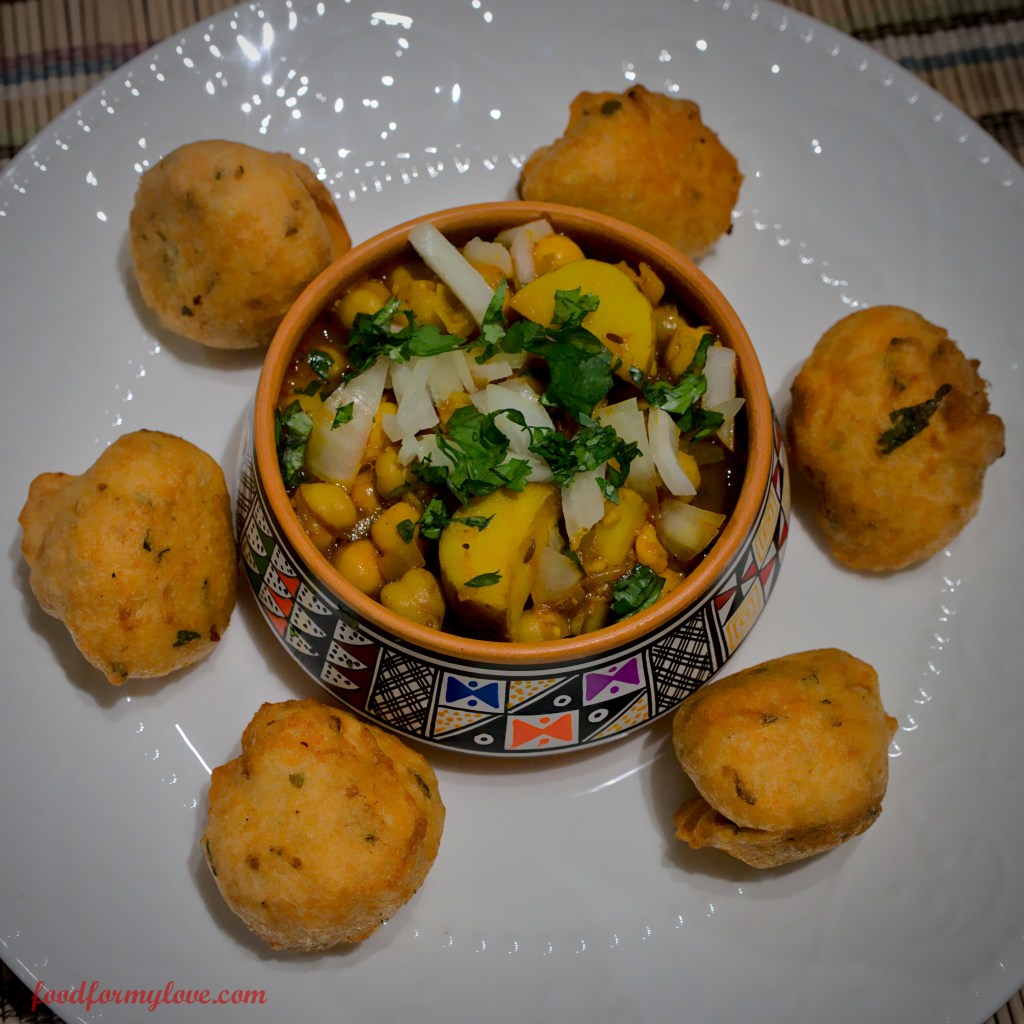


    I took the liberty to use chickpeas in this recipe because I did not have white peas in my pantry. That did slightly change the look and texture of the Ghugni (which is supposed to be slightly runny with mushy cooked white peas). But I think I managed to keep the flavor. It is very reminiscent of a vada sambhar, but has a lot more spicy and tangy toppings just like any chaat.

    Vada Ghugni, although a “street food”, can be served at multiple eating occasions at home such as breakfast, brunch or an evening snack. It is quite heavy, so I would avoid it as a dinner item.

    Prep time6 hours
    Cook time25 minutes
    Serves2-3

    Ingredients

    Lentils and Beans

    • Chole (Chickpeas) – 1 15oz can (Approx. 500gms)
    • Urad Dal (Black Gram) – 1 cup

    Vegetables

    • Onion – 1 large, chopped
    • Tomato – 2 large, chopped
    • Potato – 2 medium sized, cubed (Boiled)

    Spices and Herbs

    • Jeera (Cumin Seeds) – 1 tsp
    • Curry Leaves – 1-2, finely chopped
    • Dhania (Cilantro) – A handful, finely chopped
    • Green Chilies – 2 tbsp, crushed
    • Ginger – 1 tbsp, crushed
    • Garlic – 1 tbsp, crushed
    • Haldi (Turmeric) Poweder – 1 tsp
    • Dhania-Jeera (Coriander-Cumin) Powder – 2 tsbp
    • Laal Mirch (Red Chili Powder) – 1 tsp
    • Garam Masala – 1 tsp
    • Black Pepper – 1/2 tsp
    • Salt – As per taste

    Oils

    • Vegetable Oil – Approx. 1 cup (for frying the vadas) + 2 tbsp for cooking the Ghugni

    Ingredient notes

    • If using White Peas (Safed Vatana) instead of Chickpeas, use 1 cup of the dried Peas. These will also need to be soaked and pressured cooked
    • To add a kick to the Ghugni, additional spices such as Dalchini (Cinnamon) and Amchur (Dried Mango) powders can also be added

    Method: Vadas

    1. Wash and soak Urad Dal for 6 hours
    2. Add the soaked Urad Dal to a grinder. For the first round, grind without any water. For the following rounds of grinding, slowing add 1-2 tbsps of water each time until the batter is smooth and thick. It should not be runny
    3. Add the batter to a mixing bowl. To this, add finely chopped curry leaves, black pepper,1 tbsp of green chilies and salt. Mix well and set aside for a few minutes
    4. Add 1 cup oil to a pot and allow it to heat up. To know whether it is at the right temperature, drop a pinch of the batter to it. If the batter rises to the top, then the oil is at the right temperature
    5. Using an ice cream scoop, carefully drop a small ball of the batter into the oil. Allow one side to cook and start to turn brown. Then, carefully turn it over to allow the other side to cook. Once both sides are golden brown, carefully take it out of the pot and place it on a paper-towel lined plate for all the oil to be soaked up. Repeat for the rest of the batter (The ice-cream scoop method is for amateur fryers like me 🙂 If you feel confident, feel free to scoop up a ball of batter with your hands and carefully drop it into the oil)
    6. This quantity of batter should make about 12 vadas

    Method: Ghugni

    1. To a pan, add 2 tbsp of oil. Once it is hot, add jeera and let it splutter
    2. To this, add the chopped onions (leaving 1-2 tbsp aside for garnishing). Fry until they turn translucent
    3. Add the crushed green chilies, ginger and garlic. Continue to fry until they the rawness is cooked
    4. Add the haldi, dhani-jeera and laal mirch powders, mix well and allow the masalas to cook release their aromas for a few minutes
    5. Add the chopped tomatoes (leaving 1-2 tbsp aside for garnishing), mix well and allow the whole mixture to cook until oil is released from it
    6. Add the canned chickpeas and boiled potatoes to the pan. Add water, salt, close the lid and let the mixture simmer for a few minutes
    7. After a few minutes, using the back of a wooden spatula, mash some of the potatoes and chickpeas. This makes the sauce thicker. Add some more water as desired and continue to cook for a few more minutes
    8. Just before turning off the heat, top it off with some garam masala and mix well

    Serving suggestions

    • In a small bowl, place 2-3 vadas
    • Ladle on a generous amount of the Ghugni
    • Top with chopped onions and tomatoes
    • Optional toppings include sev, chopped green chilies, cilantro, slivers of fresh ginger, a squeeze of lemon juice, mint chutney and sweet date-tamarind chutney
    • Leftover Ghugni can also be served with pooris and rotis

    You can also follow me on Instagram to be up-to-date with what is cooking my kitchen. If you like this recipe, do share your comments below. Don’t forget to post your version on Instagram using #foodformyloveblog.
  • Pesarattu

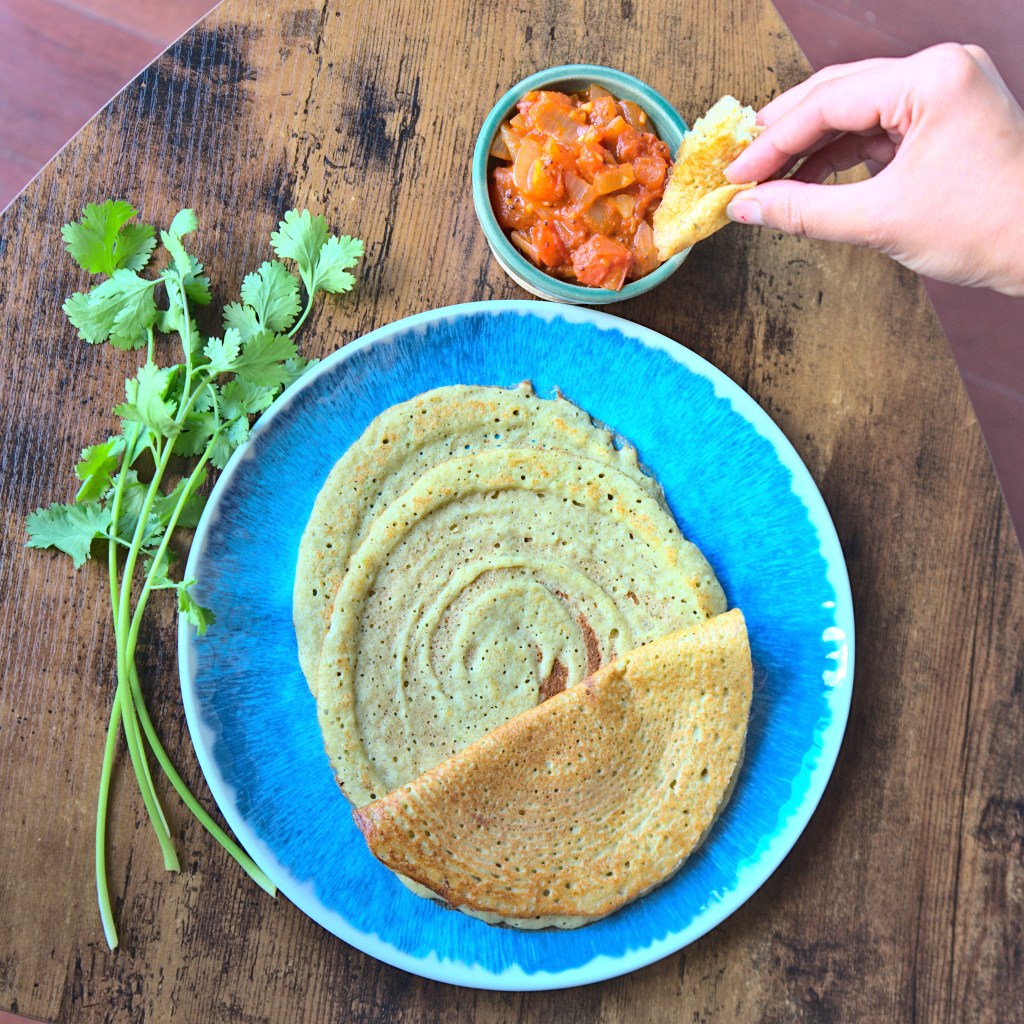
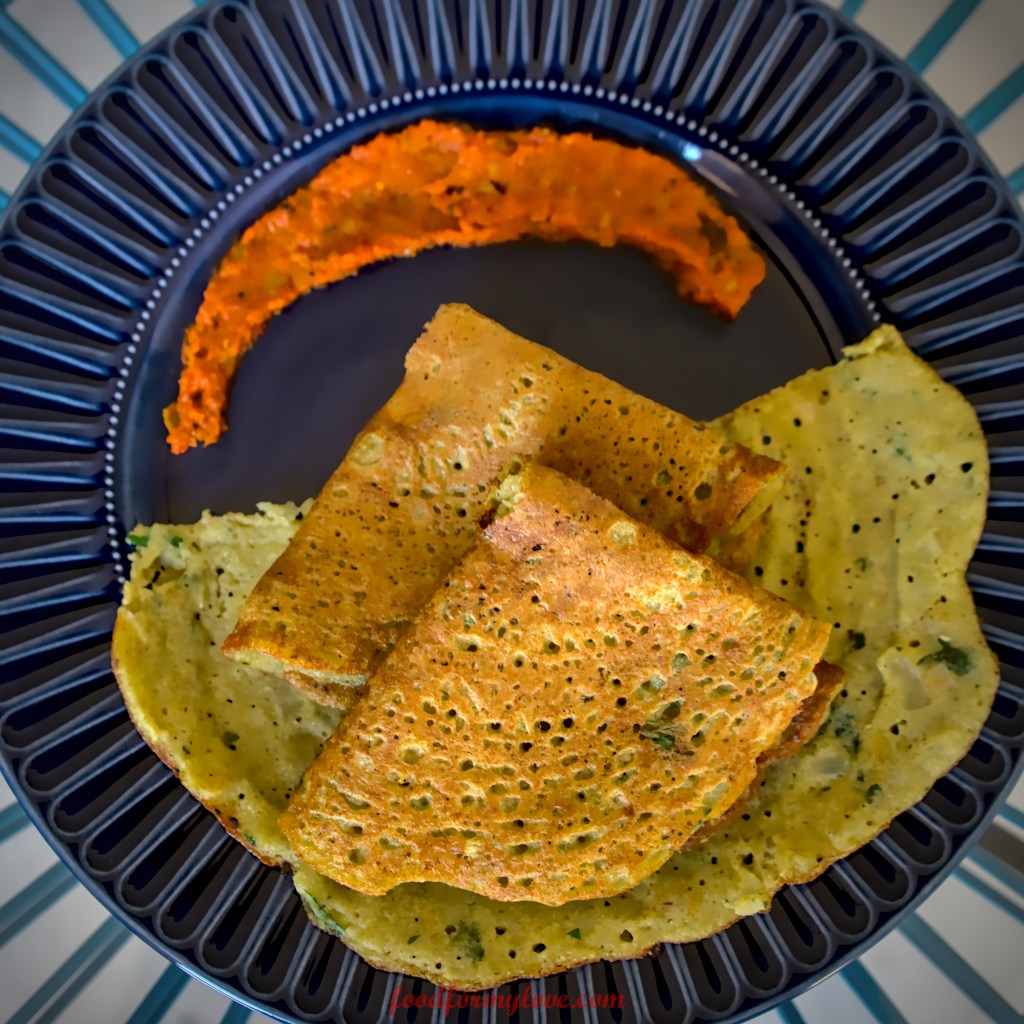
    As a Dosa lover, if there was one thing I would love, it would be to not wait for ages to enjoy a Dosa, as I am sure many of you do too 🙂 In other words, could I enjoy Dosa without having to soak the dals and rice, grind, ferment and then get the final batter? Well, yes indeed. And no, I am not referring to buying Dosa batter from a store. I am referring to the option of a non-fermented version of Dosa.

    I have posted an Adai recipe previously, which is a non-fermented Dosa. Pesarattu is yet another one. The star lentil of this dish is the power packed Mung Beans or Green Moong. As we all know, this little green lentil has impressive nutritional benefits, particularly being high in protein and fiber. For this reason, I try to include this particular lentil in my household’s diet at least once a week in some way or form.


    This type of Dosa originated in the south Indian state of Andhra Pradesh. In Telugu, Pesaru-bedalu = Green Moong and Attu = Dosa. Although Pesarattu is traditionally served with a filling of Upma (just like a Masala Dosa is served with a Potato filling), I choose to serve it with a variety of chutneys and podis, courtesy my MIL 😊

    Prep time6-10 hours
    Cook time2-3 minutes per Pesarattu
    Serves3-4

    Ingredients

    Lentils and Grains

    • Dry Mung Beans (Whole Green Moong) – 1.5 cups
    • Yellow Split Pigeon Peas (Toor Dal) – 1 cup
    • Rice – 1 cup

    Vegetables and Spices

    • Onion – 1 small, chopped
    • Ginger – 2 tbsp, chopped
    • Green Chilies – 2 tbsp, chopped
    • Cilantro – 2 tbsp, chopped
    • Salt as per taste

    Oils

    • Cooking Oil – A few tbsps

    Pro tip:

    Split Pigeon Peas (Toor Dal) is traditionally not added to Pesarattu. However, adding it to this recipe adds a crispness to the Pesarattu. This is due to the fact that the Split Pigeon Peas are lower in moisture than Mung Beans. They resist moisture absorption, thus enabling them to give a crispier texture to the Pesarattu. Alternatively, you can add Split Chickpeas (Chana Dal), which are equally dry leading them to crisp up (similar to making a pakoda where vegetables are dripped in a besan battter [besan is made from ground dried Chickpeas]). Did you know that Split Pigeon Peas and Split Chickpeas dont sprout for exactly this reason!?

    Method

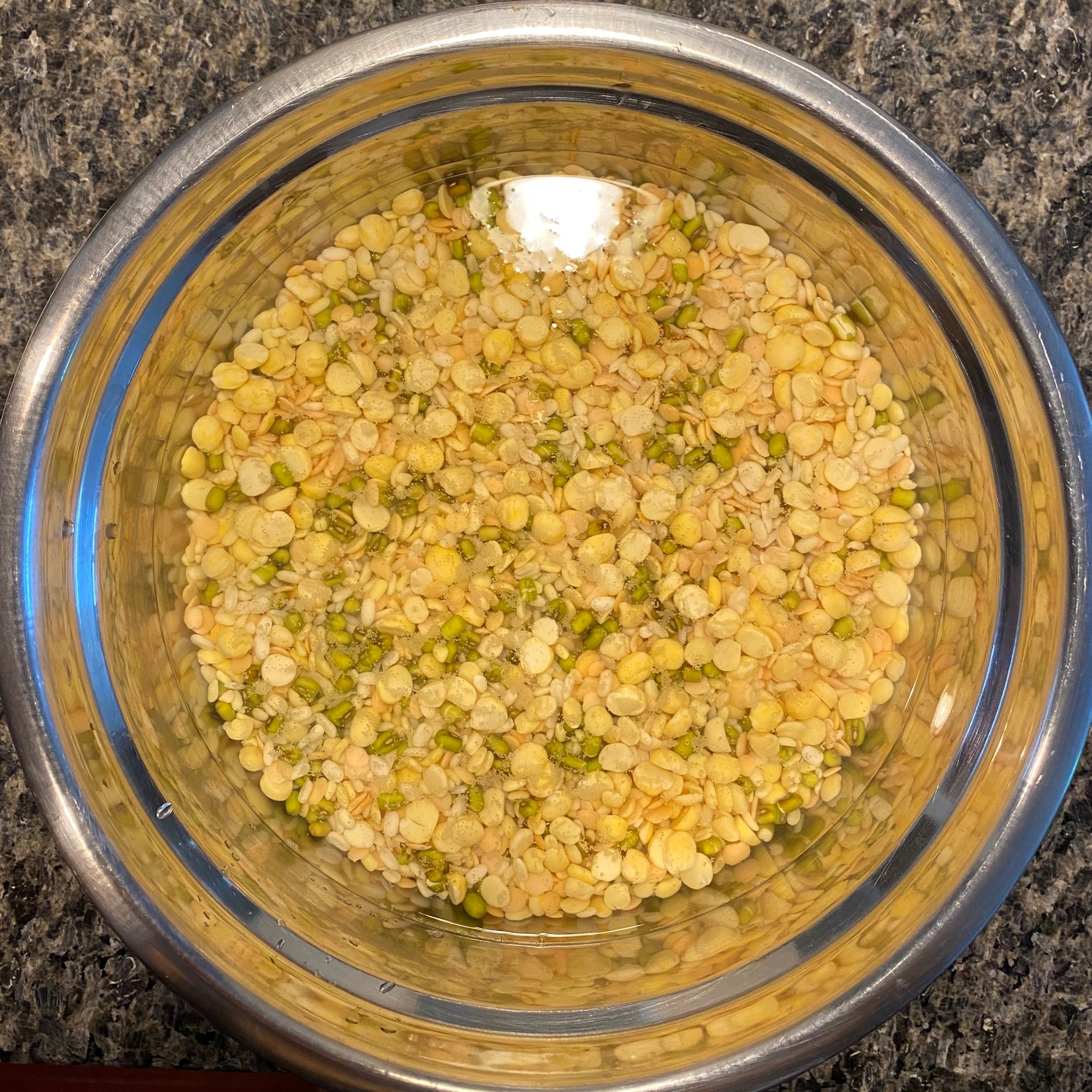
    1. Wash all lentils and grains. Soak them for a minimum of 4-6 hours or overnight
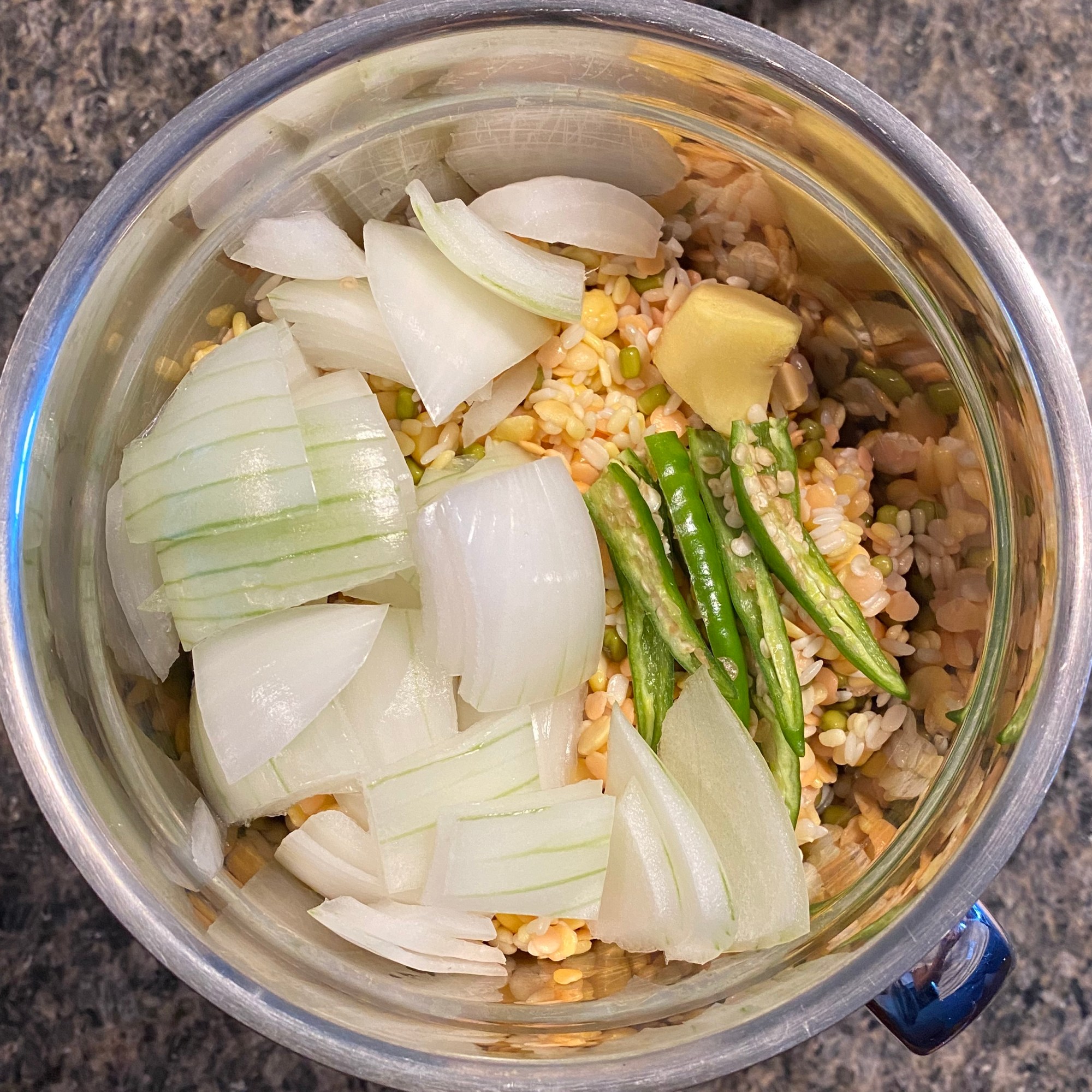
    2. The following morning, add the soaked lentils and grains to a blender.
    3. For the first round, blend without adding any water. Use a spatula to clean the sides of the blender jar to make sure there are no lumps
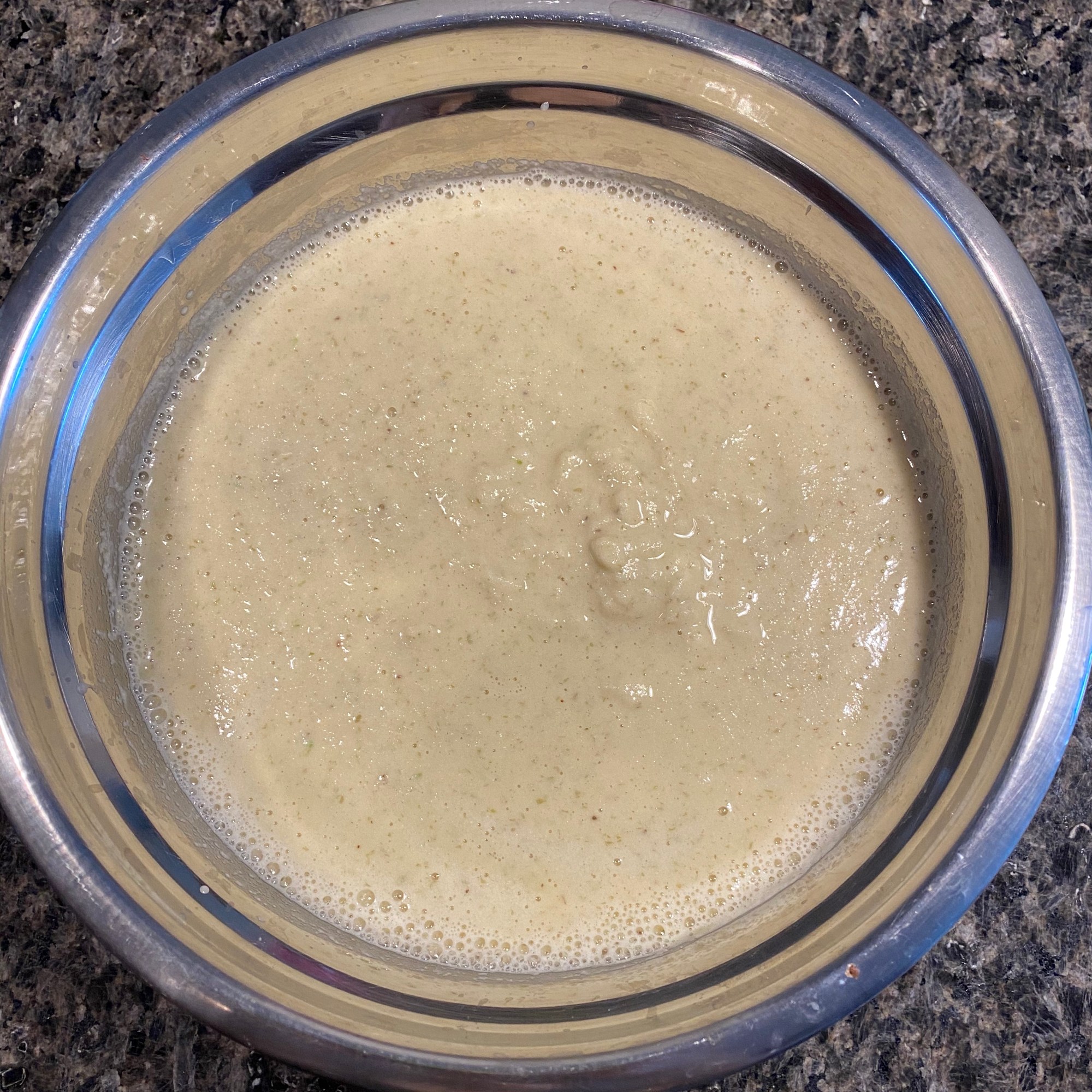
    4. Then, add approx. 1/2 cup of water to blend into a smooth batter. The batter should be of dosa batter consistency, not too thick and not too thin
    5. Transfer the batter into a bowl. To this, add all the spices and vegetables and mix well
    6. Heat a non-stick pan to medium heat. Once hot, sprinkle some water on it as a cleaning mechanism
    7. Take a ladle of batter, place is at the center of the pan and slowly spread the batter in a circular motion using the back of the ladle. Don’t apply too much pressure while spreading the batter and ensure that the batter is not spread too thin
    8. Add some 1 tbsp of oil around the spread batter. Cover with a lid for 1-2 minutes
    9. Once you remove the lid, you will see brown spots on the bottom of the Pesarattu
    10. Flip it and cook the other side for 30 seconds
    11. Remove from the pan and serve with your choice of condiments

    Serving Suggestion – Traditionally, Pesarattu is eaten with chutneys, particularly, Ginger Chutney. Check out the recipe to this chutney when you make this Pesarattu


    You can also follow me on Instagram to be up-to-date with what is cooking my kitchen. If you like this recipe, do share your comments below. Don’t forget to post your version on Instagram using #foodformyloveblog.
  • Vegan Oat Crepes

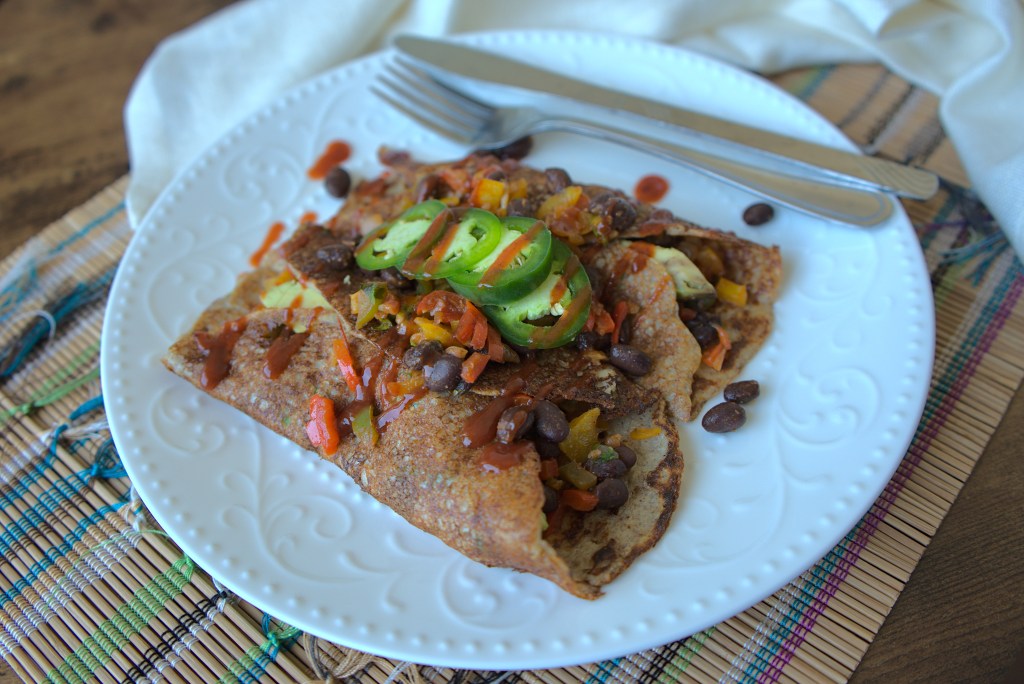
    This recipe started out with my husband’s craving for crepes. Now, I am all for crepes, but he does not like the general egg-y after taste of the regular ones. Plus, I wanted to avoid using regular flour. So, Vegan Oat Crepes it is. I chose Oats because they were readily available in my pantry and they are gluten-free. So, that’s a win. Oats, milk and flaxseed meal (egg replacement and binder) blended together to make a thin crepe batter. That’s how simple it is. These can be sweet or savory. The husband chose savory, and I ran with it!

    Now, I seem to have a weird obsession with Tex Mex and I think that is because of the similarity of flavors with Indian cuisine and because of the ingredients that are typical of this cuisine such as black beans, peppers and tomatoes. Black beans, peppers and tomatoes are a fail-safe combination that work for a variety of recipes. They are readily available, easy and quick to prepare and carry good flavors. And, I added chopped jalapenos to the batter, just to give them a zing 😉


    I am not going to lie, crepe making is not easy, so be prepared for a few flops. But, once you get the hang of it, you will want to try different variations of them i.e. with different flours and see which suits your palette the best. For instance, I heat= that buckwheat flour crepes work great, but I have yet to try them.

    What I also love about this recipe is that it has some great nutrient benefits such as protein form the beans and oats and fiber from the oats. So, the basic crepes can be prepared the night before for a quick breakfast in the morning that will keep you satiated. This also makes for a great weekend brunch with a heavier filling that can be prepared in a large batch the previous night. All you have to do is gather the troop, get some delicious crepes, load them with the filling, top it as you please and just kick back and enjoy the brunch 🙂

    Prep time15 minutes
    Cook time10-15 minutes
    Serves2 (4-6 crepes)

    Ingredients

    Crepes

    • Oats – 1 1/4 cups
    • Plant Based Milk (Unsweetened) – 1 1/2 – 2 cups
    • Flax Seed Meal – 1/2 – 3/4 tbsp
    • Jalapenos – 1, finely chopped
    • Salt – As per taste

    Filling

    • Garlic – 2-3 cloves, finely chopped
    • Tri Colored Bell Peppers – 2 cups
    • Black Beans – 1 15oz can
    • Onions – 1/2 cup, finely chopped
    • Red Chili Powder – 1 tsp
    • Cumin Powder – 1 tsp
    • Coriander Powder – 1/2 tsp
    • Jalapenos – 1, thinly sliced in a round shape
    • Salt – As per taste

    Other

    • Oil of choice – As required for cooking
    • Cilantro – 1 handful for garnish (Optional)
    • Jalapenos – 1, thinly sliced for garnish (Optional)

    Method

    1. First, prepare the crepe batter. For this, add the oats, plant based milk and flax seed meal to a blender and make a thin batter. Transfer to a bowl, add salt, chopped jalapenos, mix and set aside
    2. Next prepare the filling. For this, add oil to a pan and heat it. Once hot, add the chopped onions and garlic and cook until the garlic has slightly browned and the onions are translucent. Then, add the peppers and cook for 3-5 minutes on medium heat. Then add salt, cumin, coriander and red chili powder and cook for an additional 2-3 minutes until all the spices are cooked and the peppers are only tender. The peppers should not be mushy. Take off the heat and set the filling aside
    3. Time to prepare the crepes. For this, warm up a skillet on medium heat. Once warm, remove the skillet from the heat and brush some oil on it. Then, place a ladle of the batter on the skillet and turn it in a circular motion to allow the batter to spread thinly. Cook until the edges are golden brown (2-3 minutes). Then, carefully flip the crepe and cook on the other side for 1-2 minutes. Remove from the pan and transfer onto a plate and repeat with the remaining batter
    4. To prepare the brunch, lay a crepe on a plate, place a generous amount of filling on it and close both sides of it (as though you are preparing a wrap) and press gently to hold it in place. Garnish with additional filling, sliced jalapenos and maybe some hot sauce of your choice and enjoy a delicious brunch

    Cooking, preparation and serving suggestions

    • While the batter is sitting in between each round of crepe making, it may thicken (due to the flax used in it). So, you can add a splash of milk and mix it up to thin it as you go
    • When preparing the crepe
      • Don’t be impatient to flip them, otherwise they may break or you may get a pile of mushy batter
      • I found that placing a lid on the skillet around the crepe for the first 1-2 minutes and then letting them get golden on the edges results in the sturdiest crepes
      • When using oil on the skillet, brush the oil and spread it evenly. You don’t want any droplets of oil sitting around because too many of those will make the crepe batter turn into a mushy pile
    • To prepare sweet crepes, eliminate the salt and jalapenos. Use sweetener of choice and some delicious sweet fillings. My favorite would be the classic banana-nutella or strawberry-banana 🙂

    You can also follow me on Instagram to be up-to-date with what is cooking my kitchen. If you like this recipe, do share your comments below. Don’t forget to post your version on Instagram using #foodformyloveblog.
    Rating: 1 out of 5.
  • Tex-Mex Breakfast Bowl

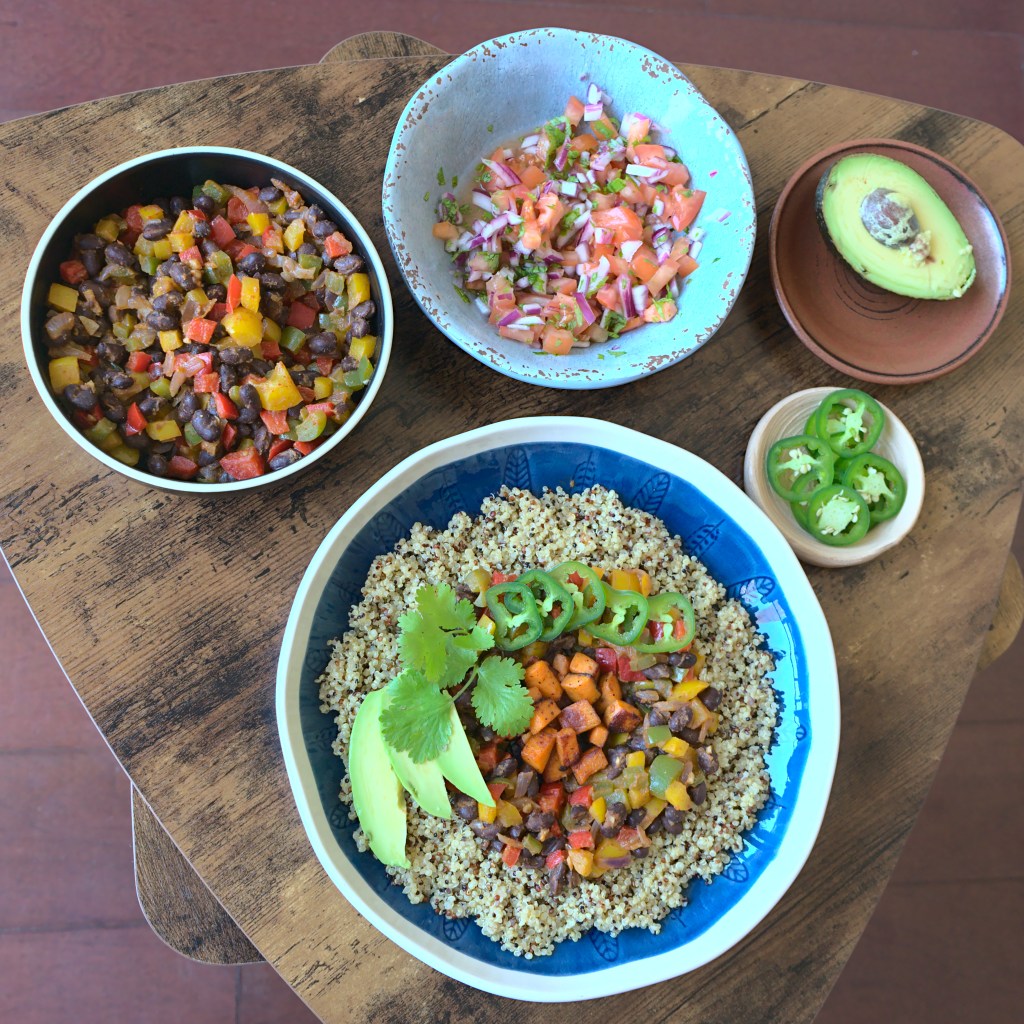
    If you have read a few of my posts, you will see me mention that I love brunch, especially on the weekends. I also enjoy food in a bowl format, something that incorporates different food components, textures and nutrition. With that in mind, this Tex-Mex Breakfast Bowl came together with some of my favorite and go-to ingredients.


    From a nutritional standpoint, this bowl hits the spot. There is Quinoa and Black Beans checking the box for protein. There are Sweet Potatoes checking the box for complex carbohydrates and there is Avocado checking the box for good fat. The Bell Peppers add a beautiful crunch, color and vitamins. So all in all, a colorful, hearty and healthy brunch bowl 🙂


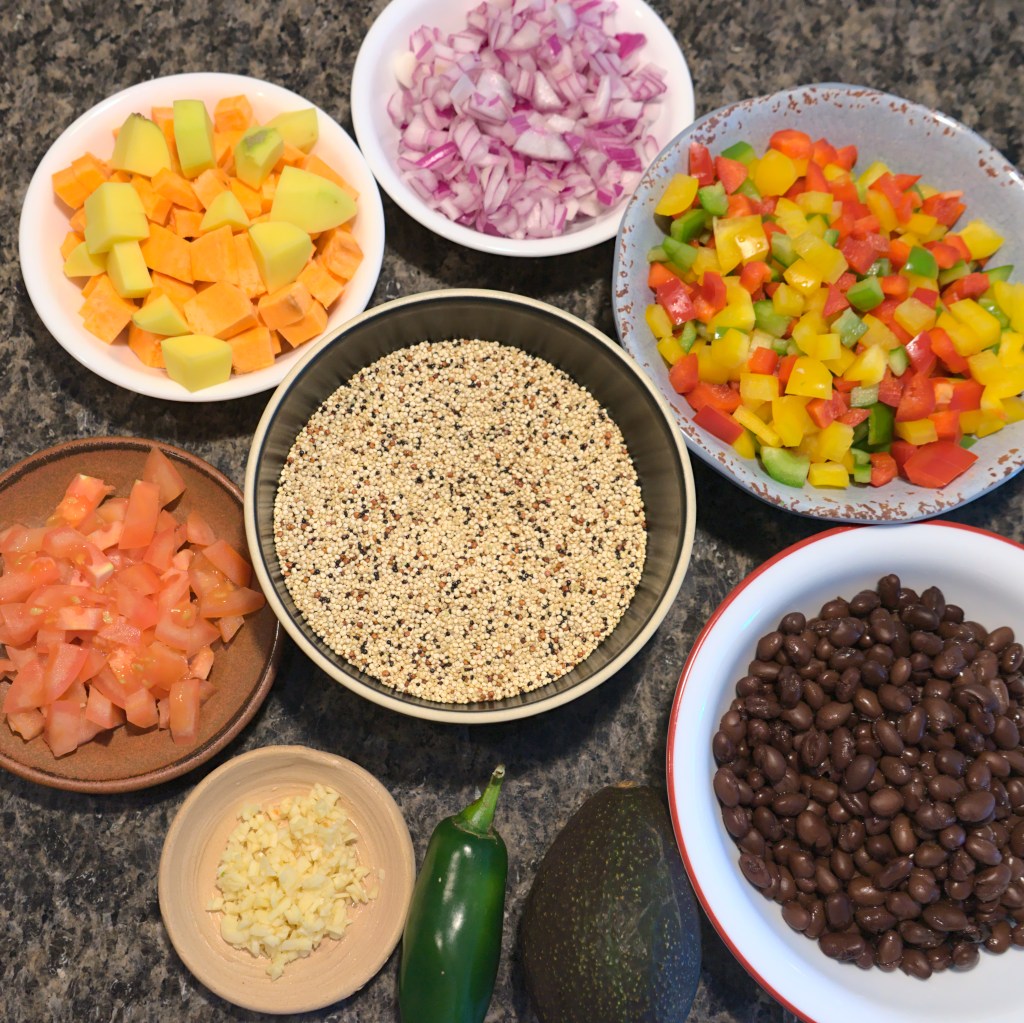
    The ingredients seem like a lot in number, but what needs to be done with them so ridiculously simple. They can all cook simultaneously, so just a few minutes need to be spent preparing the ingredients and putting the bowl together.

    Prep time10 minutes
    Cook time20 minutes
    Serves2

    Ingredients

    Beans

    • Black Beans – 1 can (15oz) [Approx. 2 cups]

    Grains

    • Quinoa – 2 cups, uncooked

    Vegetables

    • Sweet Potatoes – 1.5 cups, cubes
    • Bell Peppers – 1 cup, chopped (I used multi-colored ones, feel free to use whatever is available)
    • Onions – 1 cup, diced + 1/4 cup finely chopped
    • Tomatoes – 1 cup, diced

    Spices, Flavors and Herbs

    • Cilantro – A handful
    • Garlic – 2 tbsps, finely chopped
    • Coriander Powder – 2 tsp
    • Cumin Powder – 2 tsp
    • Jalapeno – 1, sliced
    • Red Chilli Powder – 2 tsp (Alternatively, Red Chilli Flakes or Paprika can also be used)
    • Salt – As per taste

    Fruit

    • Avocado – 1, sliced
    • Lemon – 1, Cut into 4 quarters

    Oils

    • Cooking Oil – 4 tbsp

    Method

    1. Cook the quinoa using the package instructions.
    2. In the meanwhile, cook the sweet potatoes. For this, heat 2 tbsp of oil in a pan. To this, add 1 tbsp of chopped garlic. Once the garlic starts to brown, add the cubed sweet potatoes. Add salt, 1 tsp each of coriander and cumin powder and 1 tsp of red chilli powder. Cook for 5-7 minutes until the sweet potatoes are tender and can be easily halved (not mashed) with the edge of a wooden spoon. Set these aside
    3. In the same pan, add 2 more tbsp of oil. To this, add diced onions and the remaining 1 tbsp of chopped garlic. Cook the onions and garlic. Next, add the chopped peppers and black beans. To this add salt, 1 tsp each of coriander and cumin powder and 1 tsp of red chilli powder. Cook this mixture for approx. 5 minutes until all the flavors have amalgamated. The goal is to maintain the texture of the peppers and the beans, and not to have them mashed. Set this aside
    4. To prepare the mild salsa, in a bowl, add the finely chopped onions, cilantro and diced tomatoes. To this add salt and a squeeze of 1 quarter of a lemon
    5. Time to prepare the bowl with layers. At the base, place some cooked, fluffed quinoa. On top of this, add some black bean and pepper mixture. On this, add some sweet potatoes. Top this with some salsa, sliced avocado, sliced jalapenos and a squeeze of lemon juice. Enjoy the scrumptious bowl 🙂

    Serving Suggestion

    • For extra protein, add in some scrambled eggs

    You can also follow me on Instagram to be up-to-date with what is cooking my kitchen. If you like this recipe, do share your comments below. Don’t forget to post your version on Instagram using #foodformyloveblog.

  • Vegetarian Kothu Roti

    You know how we Indians eat roti/paratha and subzi separately? Or we end up with a leftover rotis or parathas and don’t know what to do with it? Well, let’s take it up a notch by putting the roti/paratha in the subzi and make it a one-pot meal.

    Kothu Roti or Kothu Paratha is a dish that is extremely popular in the southern Indian state of Tamil Nadu and in Sri Lanka, and popular as street food. In the Tamil language, “kothu” means “to chop”. Can you guess why? Because the dish is essentially chopped roti or paratha mixed with vegetables (or meat) and cooked together with spices.


    I was introduced to Kothu Paratha by close friend who took me to a Tamilian restaurant in Atlanta that specializes with this. I instantly feel in love with it. It is a flavorful and aromatic dish that can be customized with vegetables and meat.

    Traditionally, Kothu Paratha, as the name suggests, is prepared with parotta. To be clear, parotta and paratha are not the same. Parotta is made from all purpose flour and is more stretchy and flaky, where as paratha is prepared from whole wheat flour. Rotis are also used, but not the regular whole wheat rotis. The specific rotis used in the traditional Sri Lankan style dish is “Godamba Rotis” which are thin flatbreads made from all purpose. But I had several pre-prepared rotis so I used it in this recipe, hence Kothu Roti.

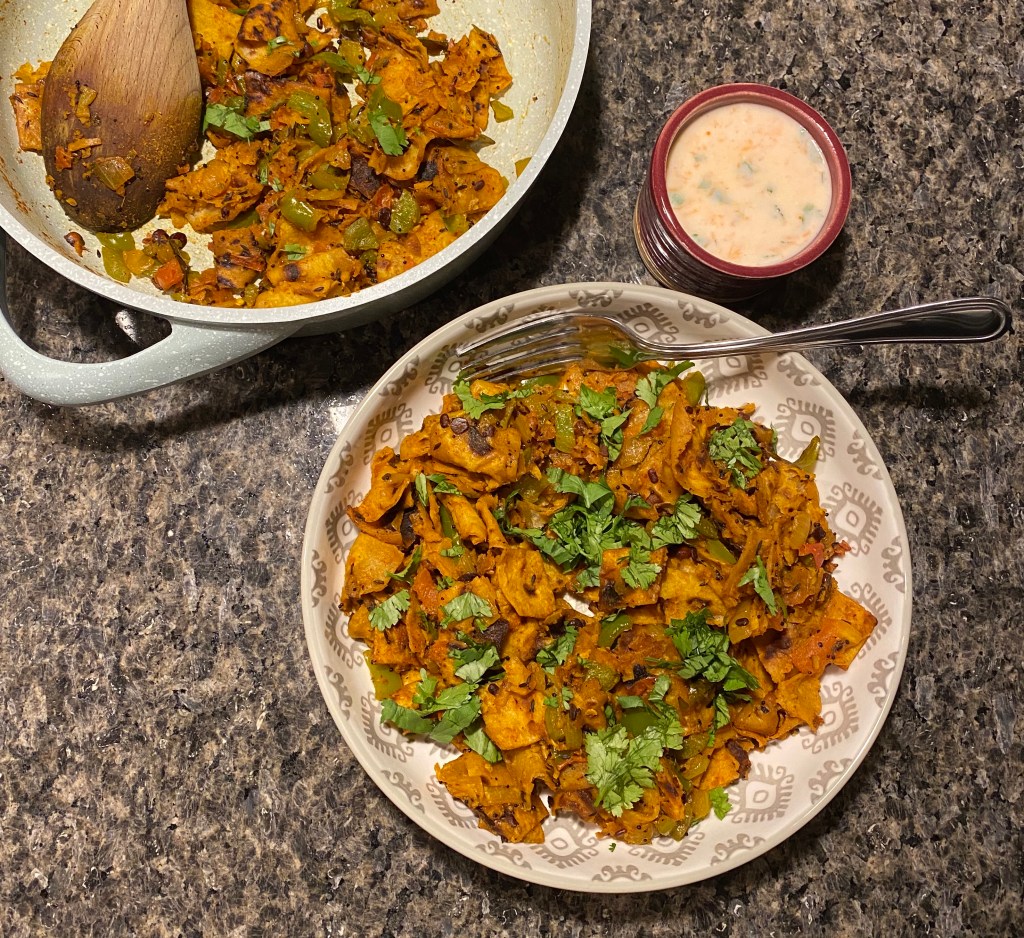
    There are many additives that can be used to spruce up the Kothu Paratha or Kothu Roti. For instance, I like to scramble an egg in every now and then. Maybe even try some srambled paneer. For non-vegetarians, there are a variety of meat options that can be added as well. In this recipe, I skimmed on the vegetables, but feel free to customize as you like. This dish is usually quite spicy and as such, it is served with a chilled raita.

    Prep time5 minutes
    Cook time15 minutes
    Serves2

    Ingredients

    Vegetables

    • Yellow or Red Onion – 1 cup, finely chopped or sliced
    • Tomato – 1 cup, chopped
    • Green Bell Peppers – 1 cup, chopped

    Spices

    • Saunf (Fennel Seeds Powder) – 1 tbsp (Reduce to 1/2 tbsp if you don’t like the flavor of it)
    • Red Chilli Powder – 1 tsp
    • Turmeric – 1/2 tsp
    • Cumin-Coriander Powder – 1 tsp
    • Garam Masala – 1 tsp (Optional)
    • Salt – As per taste
    • Mustard Seeds – 1 tsp
    • Jeera (Cumin Seeds) – 1 tsp
    • Ginger – 1 tbsp, finely chopped
    • Garlic – 1 tsp, finely chopped
    • Curry Leaves – A handful

    Lentils

    • Urad Dal (Black Gram) – 1 tsp
    • Chana Dal (Split Baby Chickpeas) – 1 tsp

    Bread

    • Roti – 6

    Oils

    • Cooking Oil – 1-2 tbsp

    Ingredient notes

    • Feel free to add other vegetables of your choice
    • For protein, scramble some eggs or paneer (or tofu, if vegan)
    • Customize your spices as per your liking
    • You can also use parathas or frozen rotis or parathas


    Method

    1. Heat oil in a pan. Make sure the heat is medium-high throughout the process
    2. Add mustard seeds. Once they crackle, add jeera, urad dal, chana dal and curry leaves. Saute for 1-2 minutes until the lentils turn slightly brown
    3. Add chopped ginger and garlic. Saute 1-2 minutes until they brown
    4. Add chopped onions. Saute for 3-4 minutes until they turn translucent
    5. Add tomatoes and let them cook down for 3-4 minutes
    6. In the meanwhile, take the pre-prepared rotis and roughly chop them by hand or using a pizza cutter or knife
    7. Once the tomatoes have cooked through, add salt and all the spices (except garam masala). Mix well. Add a splash of water to de-glaze the pan and create a saucy consistency. Let this simmer for 2-3 minutes
    8. Add the green bell peppers and mix. No need to cook them, just let it have a crunchy texture. The optional step at this stage is to add a tsp of garam masala for some extra flavor
    9. Turn the heat to low-medium. Add the chopped rotis and mix well until all the rotis are coated with the spices
    10. Plate it, garnish with cilantro (Maybe even a squueze of lemon juice) and serve with chilled raita

    You can also follow me on Instagram to be up-to-date with what is cooking my kitchen. If you like this recipe, do share your comments below. Don’t forget to post your version on Instagram using #foodformyloveblog.
    Rating: 1 out of 5.
  • Adai

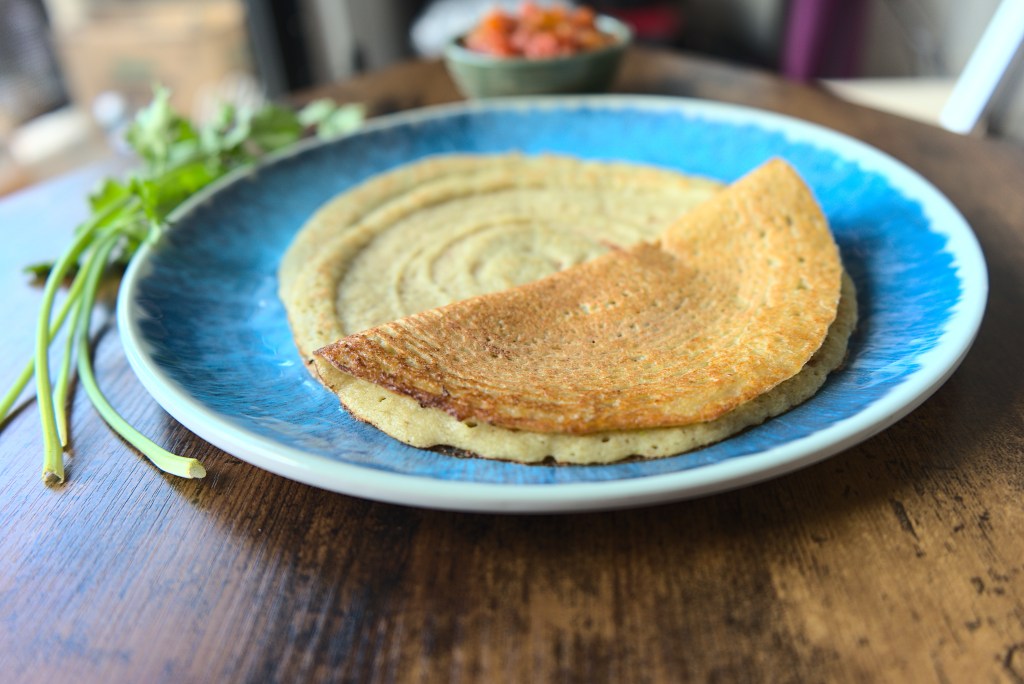
    Dosa (Lentil Crepes) is the quintessential, and a staple, south Indian breakfast. All south Indians, and all Indians for that matter have grown up eating Dosas. For me, it was just one of those things that was always at home. Don’t have anything else to eat, let’s make a Dosa. Need a snack? Let’s make Dosa. Quick breakfast, let’s make Dosa. But, when I moved away from home, making Dosa became a far fetched dream, simply because of the process involved in preparing, fermenting and grinding the batter. It only took 2 years of video calls with my mum to perfect the batter.

    And then, I found the recipe to this Adai in my mum’s recipe book (which I stole :)). I had heard of Adai, and although it is more common in a Tamilian household, food has broken all boundaries and barriers. So presumably my mum got the original recipe from one of her friends and then gave it her own twist. And it is just great. Now having tried it, I wonder why it has not made its way to a single south Indian restaurant menu. I think it can compete just as well with a Dosa or an Utthapam.


    Adai falls perfectly in the category of multigrain foods and better yet, a home prepared version. Adai is a Dosa prepared using batter made from a variety of lentils. The key is to use equal parts of as many lentils as rice. The best part is, there is no fermentation involved and you really cannot go wrong with it. What I like about it is its high nutrition content. The protein and fiber from the mix of all the lentils is just perfect, just like eating a mixed dal. Furthermore, the recipe is vegan and gluten-free. The lentils, spices and herbs that are added to the batter can be customized to your preferences.


    Now, to be clear, Adai is different from an Adai Dosa. While the former involves just soaking the lentils and grinding it into a batter, the latter involves a short fermentation for the batter. Adai can be served with a variety of condiments such as chutneys, podis, saagu or even avial. Some households even serve it with honey or butter. I served the Adai with my favorite Tomato Chutney that is also my mum’s recipe. Get the recipe here. Any which way, Adai is a must-try scrumptious and high-protein dish.

    Prep time10-12 hours
    Cook time15-20 minutes
    Serves6-8 people/20 Adais

    Ingredients

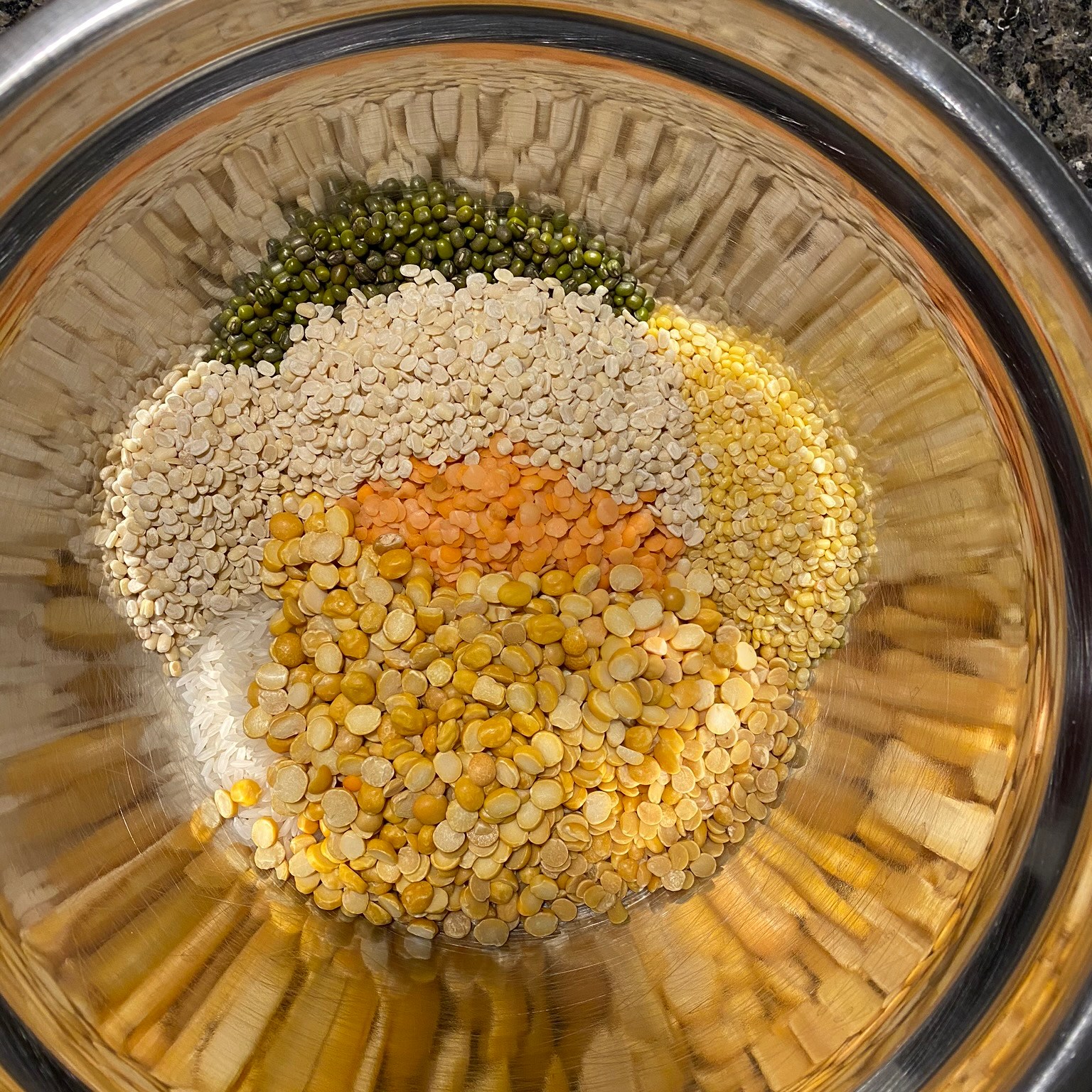
    Grains and Lentils

    • Rice – 1/2 cup
    • Green Moong Dal – 1/2 cup
    • Masoor Dal (Red Lentils) – 1/2 cup
    • Yellow Moong Dal (Yellow Petite Lentils) – 1/2 cup
    • Toor Dal (Pigeon Peas) – 1/2 cup
    • Chana Dal (Split Baby Chickpeas) – 1/2 cup
    • Urad Dal (Black Gram) – 1/2 cup

    Vegetables

    • Onion – 1 small, chopped

    Spices, Flavors and Herbs

    • Ginger – 1 inch piece
    • Green Chillies – 3, slit (Adjust as per spice preference)
    • Cilantro – A handful (Optional)

    Oils

    • Cooking Oil – A few tbsp for cooking the Adai

    Ingredient notes

    • Add 1/2 cup Quinoa or Oats for added nutrition
    • Add a handful of Moringa, Fenugreek (Methi) or blanched Spinach for a green Adai and added nutrition
    • Add any other spices like Fennel (Saumph) or Cumin (Jeera) seeds

    Method

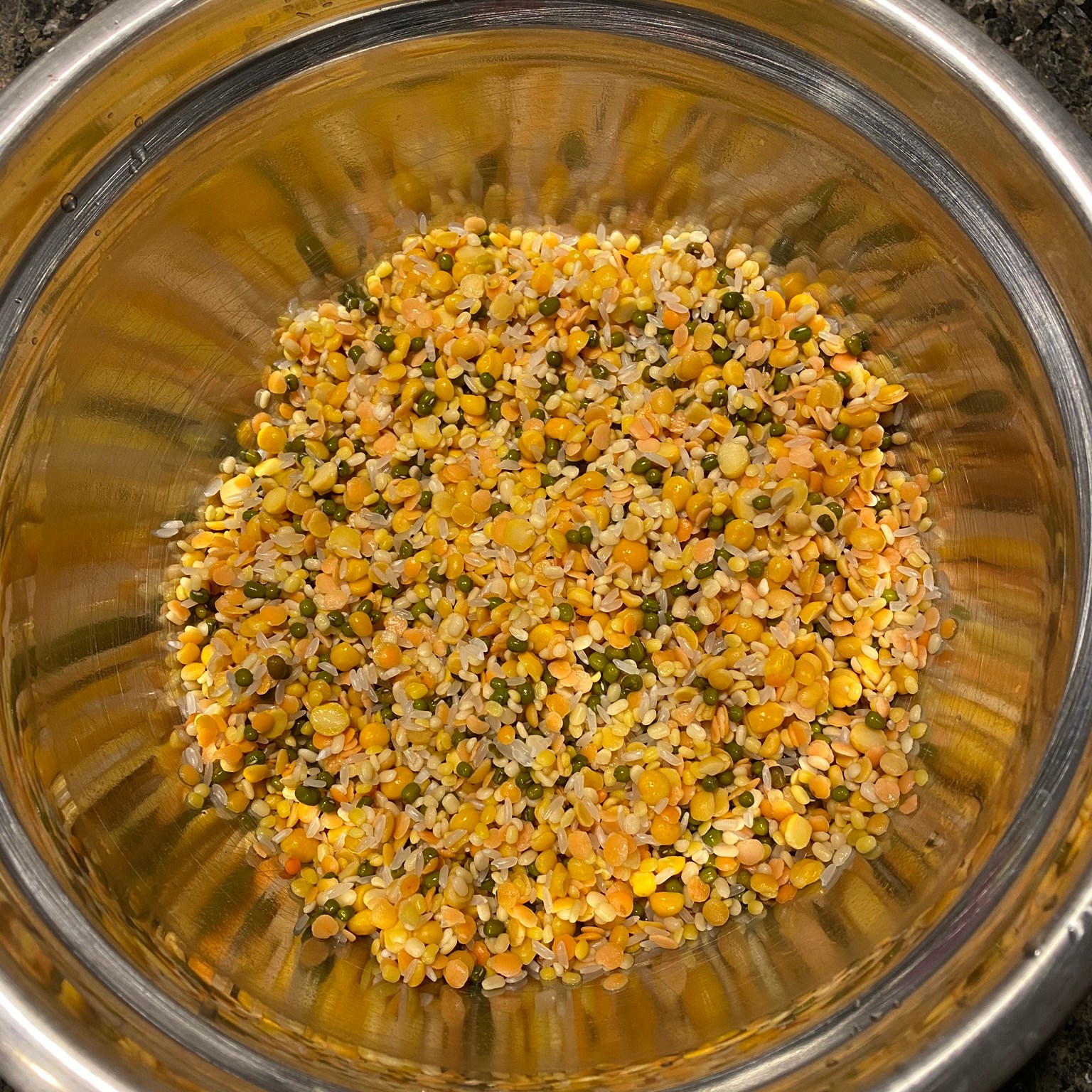
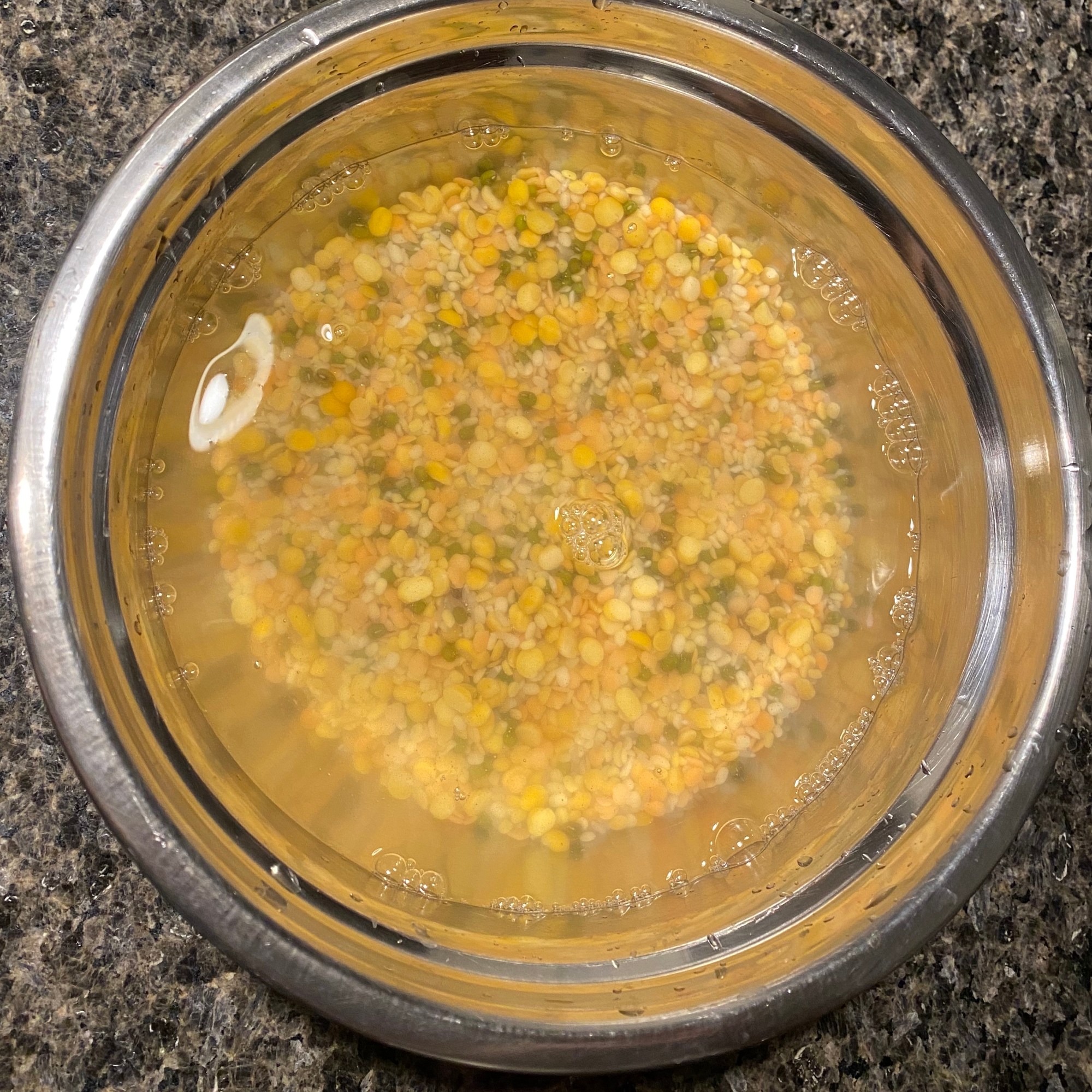
    1. Place all the lentils and grains in a bowl. Wash under cold running water until the water is clear. Add water and soak overnight (Approx. 10-12 hours)
    2. The following morning, drain the water and add the soaked lentils and grains to a blender
    3. To the blender, add the ginger, onions and green chillies
    4. Blend without adding any water. Use a spatula to clean the sides of the blender jar to make sure there are no lumps
    5. Then add 1/2 cup water to further blend into a smooth batter
    6. Transfer the batter to a bowl and set aside for 1-2 hours
    7. Heat a non-stick pan (Don’t add oil as the batter will not spread. Trust me, experience speaks!)
    8. Pour one ladle of the batter on the pan and spread it into a nice circle. Pour a tbsp of oil around the Adai. Cook for 2 minutes on medium-high heat
    9. Flip the Adai and cook for another 2 minutes on medium-high heat
    10. Transfer to a plate and serve hot Adais with choice of condiments 🙂

    You can also follow me on Instagram to be up-to-date with what is cooking my kitchen. If you like this recipe, do share your comments below. Don’t forget to post your version on Instagram using #foodformyloveblog.
  • Potato and Swiss Chard Breakfast Hash

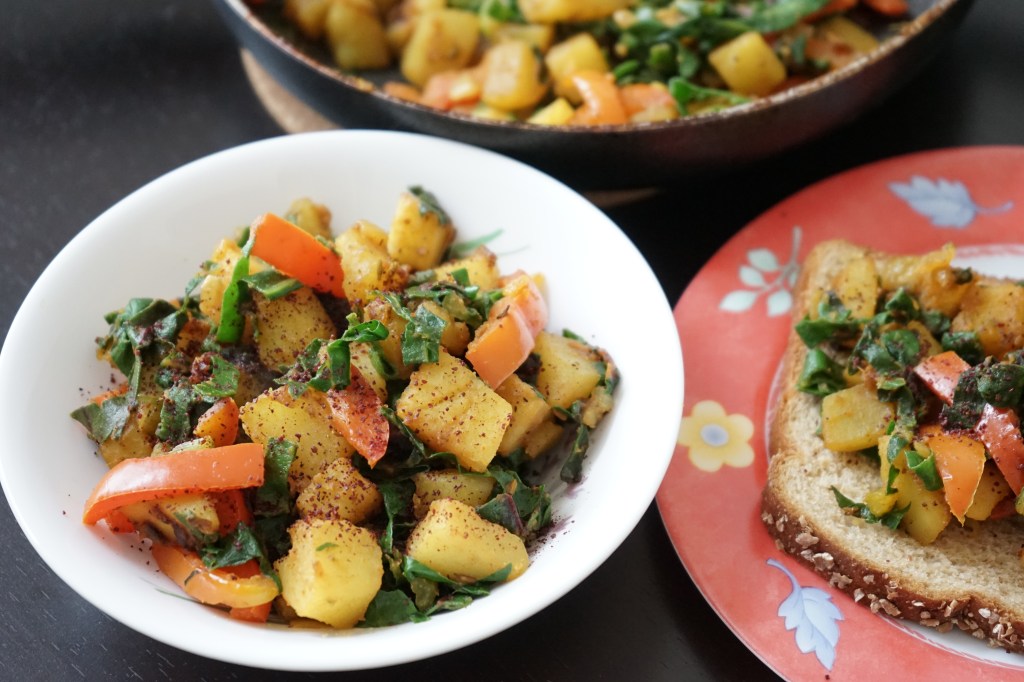
    Weekends are for brunches. And brunches should be hearty. And Potatoes make everything hearty. But, yet again, this is another opportunity to get your dose of leafy green vegetables and not have to worry about for the rest of the day or the weekend.


    A hash is one of the best ways to incorporate all sorts of vegetables and proteins into a breakfast or a brunch. There is nothing fancy about this recipe other than the fact that I have added a leafy green vegetable, Swiss Chard. It is colorful and pleasing to the eye. And if you are wondering how this is different from an Aloo Palak or an Aloo Methi, it is not that different. This is just a modern take on it. Read on for the recipe and the many different ways it can be eaten.

    Prep time10 minutes
    Cook time12 minutes
    Serves2-3

    Ingredients

    Vegetables

    • Potatoes – 2, medium sized, diced (Regular Yukon Gold Potatoes)
    • Red Bell Pepper – 1, julienned
    • Swiss Chard – 1 bunch, roughly chopped
    • Onion – 1 small, diced

    Spices and Herbs

    • Cumin Seeds – 1 tsp
    • Garlic – 2 cloves, crushed (Or 1 tbsp powder)
    • Roasted Cumin Powder – 1.5 tsp
    • Salt – As per taste
    • Turmeric Powder – 1 tsp
    • Sumac – 1 tsp

    Oils

    • Cooking Oil – 2 tbsp

    Food safety tips

    – Make sure to wash the leaves for 30 seconds under cold running water while gently rubbing the leaves to release any trapped dirt

    – Separate leafy greens from raw meat or poultry products and use separate cutting boards for each to prevent bacterial cross contamination

    – Discard leafy greens within 2 hours of chopping or cooking. Always buy leafy greens that are kept at a chilled temperature to prevent bacterial growth


    Ingredient notes

    • Red skin potatoes or purple potatoes will also work well with this recipe
    • Any other type of leafy green such as kale or spinach can also be used

    Method

    1. In a pan, add oil. Once it heats up, add cumin seeds
    2. When the cumin seeds splutter, add onions and garlic and cook until the onions are translucent
    3. Add the potatoes and turmeric powder. Mix, cover the lid for 3-5 minutes and cook on medium flame until the potatoes are half cooked
    4. Then add the red pepper, salt and roasted cumin powder. Mix again, cover the lid for 3-5 minutes and cook again until the potatoes are cooked through, but not mushy
    5. Add the swiss chard, mix and cover the lid for 1-2 minutes until the leaves have wilted (The idea is to steam the greens to preserve nutrient content, not to cook them completely)
    6. Turn off the flame, sprinkle sumac powder and mix well
    7. Add a spoonful of the hash on a toasted bread and enjoy

    Serving Suggestions

    • Prepare a breakfast hash bowl with the prepared hash and eggs in any style you like
    • On a whole grain wrap, add scrambled eggs, the prepared hash and sriracha sauce. Wrap it up to make a breakfast burrito for your breakfast on the go
    • Add a vegan protein element such as black beans, chickpeas or tofu

    You can also follow me on Instagram to be up-to-date with what is cooking my kitchen. If you like this recipe, do rate it and share your comments below. Don’t forget to post your version on Instagram using #foodformyloveblog.
  • Oats Cheela

    Oats, as many of us know, are a powerhouse of health benefits. These include nutrient richness (protein, carbohydrates, calcium and fiber), low in sugar, low in fat, good for cholesterol and diabetes control, and most of all satiety. In fact, research from the World Health Organization has shown that the protein content of oats is nearly equivalent to soy, meat, milk and egg protein.

    It is a good idea to learn the basics of Oats before you cook, so that you can choose the Oats most suitable to your recipe. So, here goes – Oats start out as oat groats, which are then processed into different formats such as steel cut, rolled, instant/quick oats and oat flour/bran. When oat groats are cut using a sharp blade, that makes steel cut oats. These take the longest to cook and have a chewy texture. On the other hand, rolled oats are are created when the oat groats are steamed (to make them pliable) and then rolled to make them flat. These take less time to cook (compared to steel cut), and manage to retain their size and texture after cooking. Finally, instant oats are made when the rolled oats are steamed and further rolled to make them thinner. This allows them to absorb moisture more quickly and therefore, cook instantly. Because of this, they don’t retain a shape of texture and end up mushy. Clear as mud?


    In my quest to find a breakfast that would satisfy my monstrous morning hunger and keep me full, I made the transition from cereal to oats. However, the store brought oats are either plain or flavored, and therefore loaded with sugar. The serving size and quantity just does not justify the amount of sugar that comes with it. Plus, being Indian, my palate is always looking for something savory, even on a breakfast occasion. That led me to the discovery of Oats Chilla, courtesy Shilpa Shetty’s cooking channel.

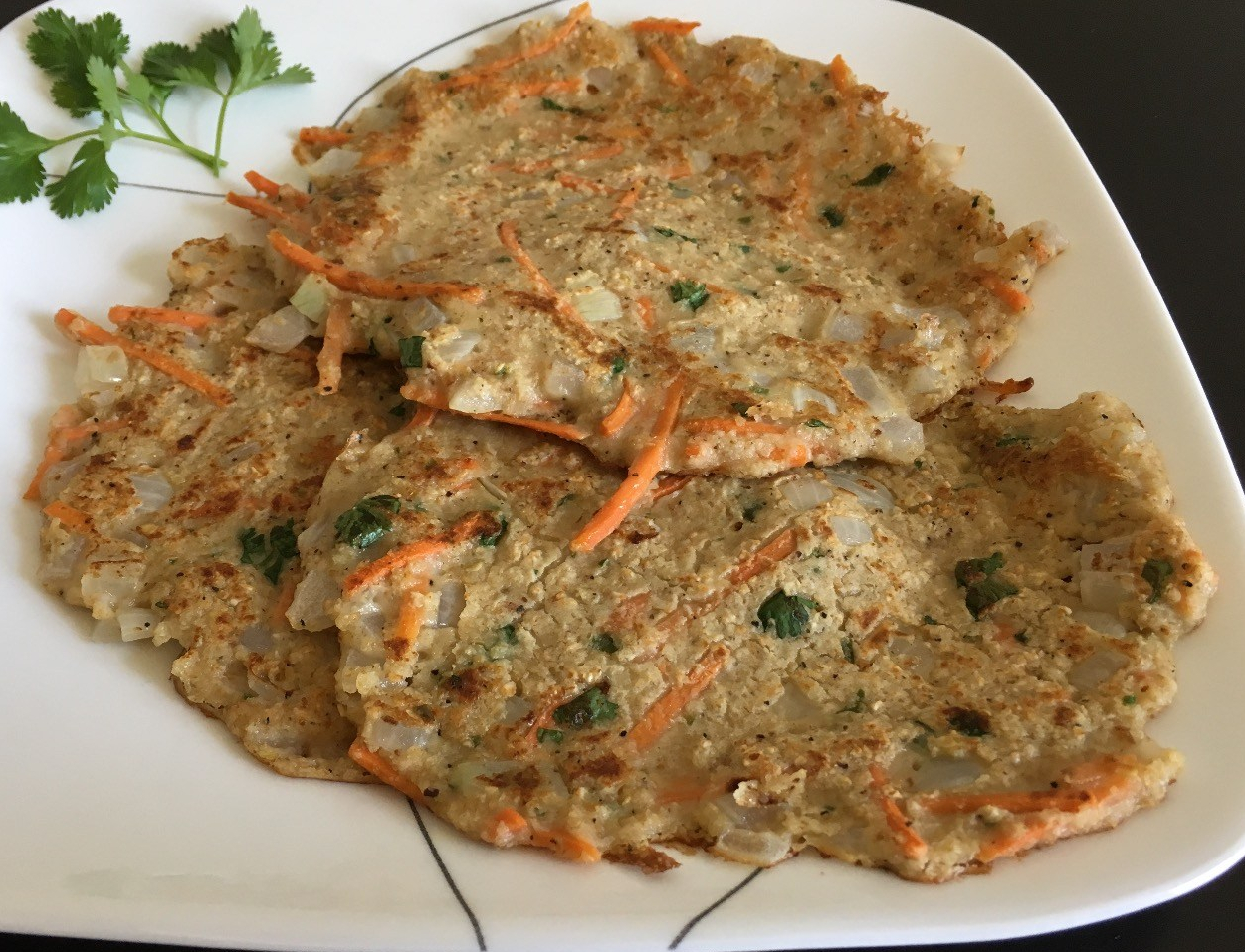
    A Cheela is basically a savory pancake made out of a grain based flour. A lot of Cheela recipes that I found were besan (gram/chickpea flour) based. My stomach does not do very well with besan, so I avoid it as much as possible. Therefore, this Oats Cheela recipe, that I adapted from Shilpa Shetty’s recipe, is a wholesome and nutritious breakfast. And of course I decided to experiment on my husband, and he loved it. But what made it a super, duper hit was when my husband’s 6 year old niece, who is generally a very picky eater (as any other 6 year old), gorged on 6 Cheelas!!! Now, these can be very heavy because of the Oats, but she loved them, and I was beyond excited. I have been getting my mum to eat Oats forever, but she finds the mushiness of Oats to be repulsive. Yet, this recipe was a hit with her too, which means the world to me. And thus began my love for Cheelas that I continue to share with family and friends.


    Prep time10 minutes
    Cook time10 minutes
    Serves2 (2-4 medium sized Cheelas)

    Ingredients

    Vegetables

    • Onions – 1/4 cup, finely chopped
    • Carrots – 1/4 cup, shredded or finely chopped

    Grains

    • Oats – 3/4 cup

    Spices and Herbs

    • Roasted Jeera Powder (Cumin) – 1/2 tsp
    • Black Pepper – 1/2 tsp
    • Chaat Masala – 1/2 tbsp (Add more as your taste)
    • Salt as per taste
    • Cilantro – 2 tbsp, finely chopped
    • Ginger – 1 tbsp, crushed
    • Green Chillies – 1 tbsp, finely chopped (or as per your taste requirement)

    Dairy

    • Milk – 1 cup (Add extra as needed to adjust the consistency)

    Oils

    • Cooking Oil – 2 tbsp

    Ingredient notes


    Method

    1. In a pan, toast the oats until they are slightly brown and release a nutty aroma
    2. Grind the toasted oats to make a fine powder
    3. Add milk and blend until the batter has a smooth consistency. The ideal consistency should not be too smooth and nor too grainy. So adjust the amount of milk to achieve the desired consistency. Transfer the batter to a mixing bowl
    4. Add the vegetables, spices, herbs and mix well
    5. Adjust consistency with more milk, if required
    6. Heat a pan, add 1tbsp oil, and use a brush to spread the oil on the pan
    7. Add the batter and slowly spread it evenly. You may not able to spread with a spoon, so lift the pan and turn it in a circular motion to spread the batter
    8. Cover with a lid and cook on medium heat for 45-60 seconds
    9. Remove the lid, drizzle 1 tsp oil on the cheela and flip it to cook the other side. You will know that it is cooked when it has brown spots on it, just like a roti
    10. Transfer to a plate and serve with your choice of chutney

    You can also follow me on Instagram to be up-to-date with what is cooking my kitchen. If you like this recipe, do rate it and share your comments below. Don’t forget to post your version on Instagram using #foodformyloveblog.
  • Spicy Sweet Potato and Quinoa Cakes

    Weekend brunches are my favorite. Whether it is an outdoor one or a home one. I try to spend at least one weekend day experimenting and trying new recipes. This time, I was inspired by Sadia from Pick Up Limes and I decided to make it my own.

    As the name suggests, this recipe’s star ingredients are sweet potatoes and quinoa. While the former provides a dose of complex carbohydrates, the latter acts as a good protein source. This recipe involves a little more effort than normal, but I guarantee you, it is well worth your time. The best part is that cakes are baked with minimal oil, making it uber healthy.


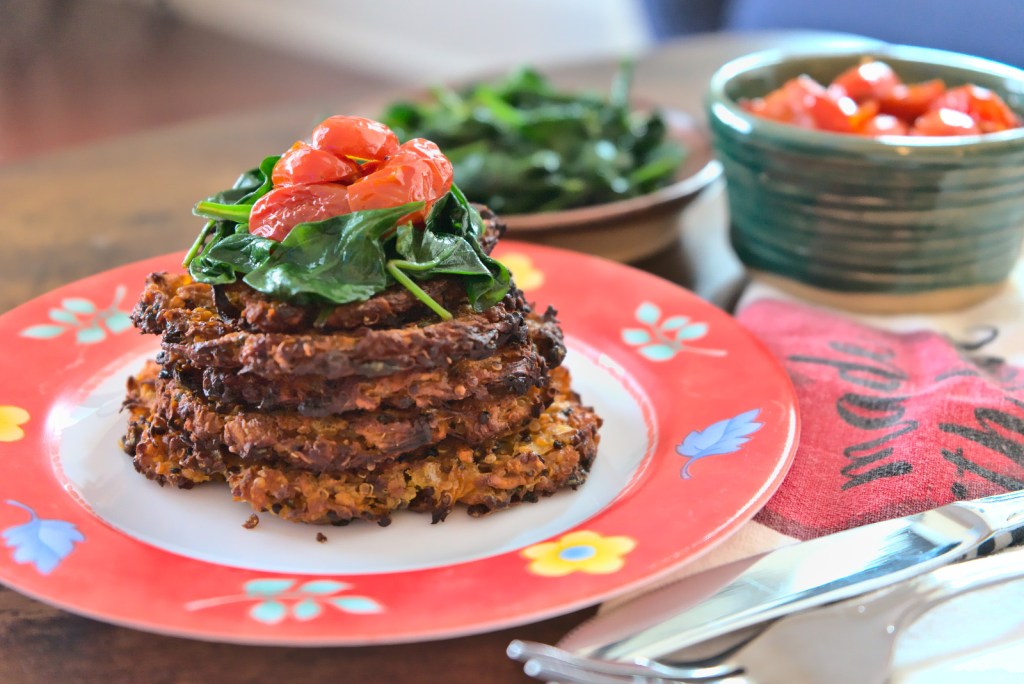
    The cakes can be eaten by themselves or with a variety of toppings. This recipes uses garlicky chilli tomatoes and sauteed spinach as toppings.


    Prep time30 minutes
    Cook time30 minutes
    Serves2-3 (Makes 8-10 medium sized cakes)

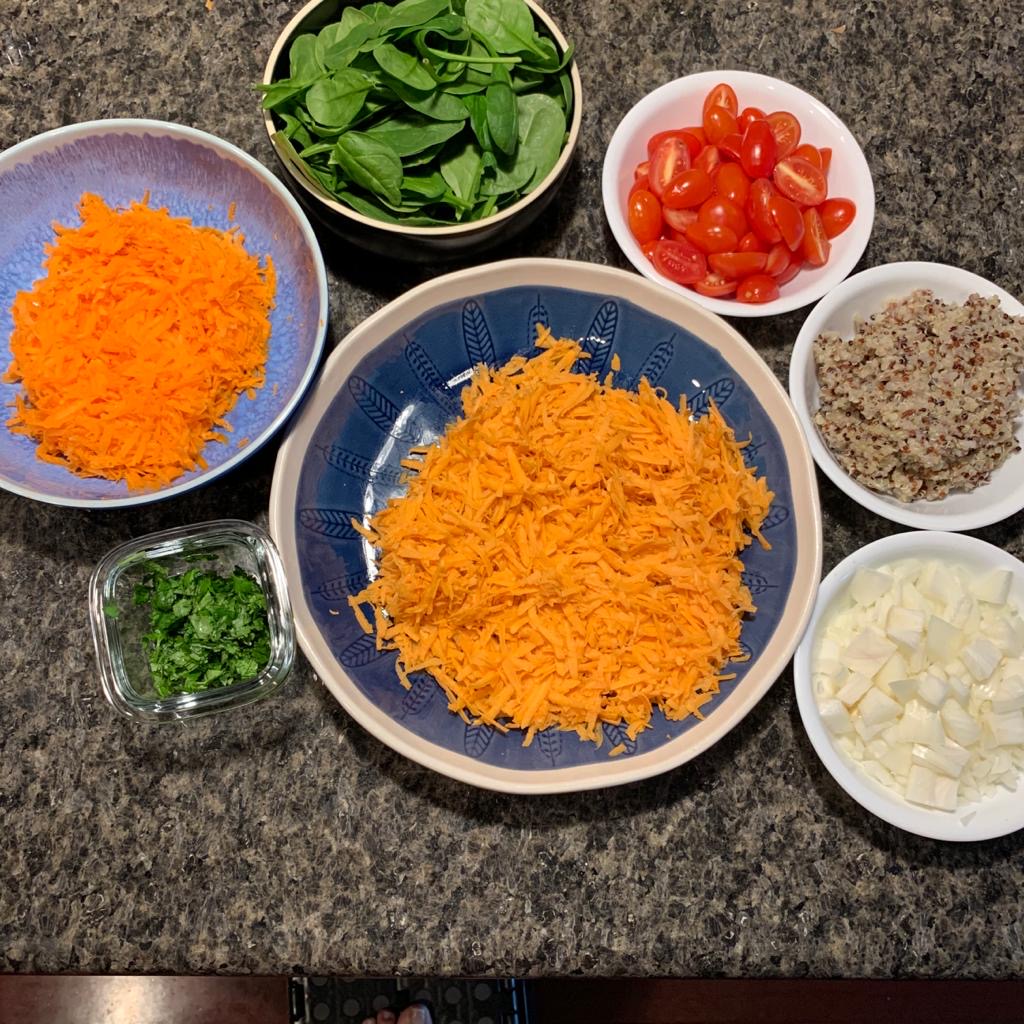
    Ingredients

    Vegetables

    • Sweet Potatoes – 1-2 medium, shredded
    • Carrot – 1 medium, shredded
    • Onion – 1 medium, finely chopped
    • Fresh Spinach – 2-3 cups
    • Cherry Tomatoes – 20-25 pieces

    Grains

    • Quinoa – 3/4 cup (uncooked)

    Spices & Herbs

    • Salt – As per taste
    • Ground Black Pepper – 1/4 tsps
    • Garlic – 1 tbsp, crushed
    • Paprika – 1 1/2 tsps
    • Red Chilli Flakes (Optional) – 1/2 tsp
    • Fresh Cilantro – 2 tbsps, finely chopped
    • Cumin Powder – 1 tsp

    Flours

    • Chickpea Flour – 3-4 tbsp (for binding)

    Oils

    • Olive Oil – As needed to brush on the baking tray and on the cakes prior to baking

    Method

    1. Add the quinoa to a pot with 1 1/2 cups of water and let it cook on medium heath until all the water has evaporated and the quinoa can be fluffed with a fork
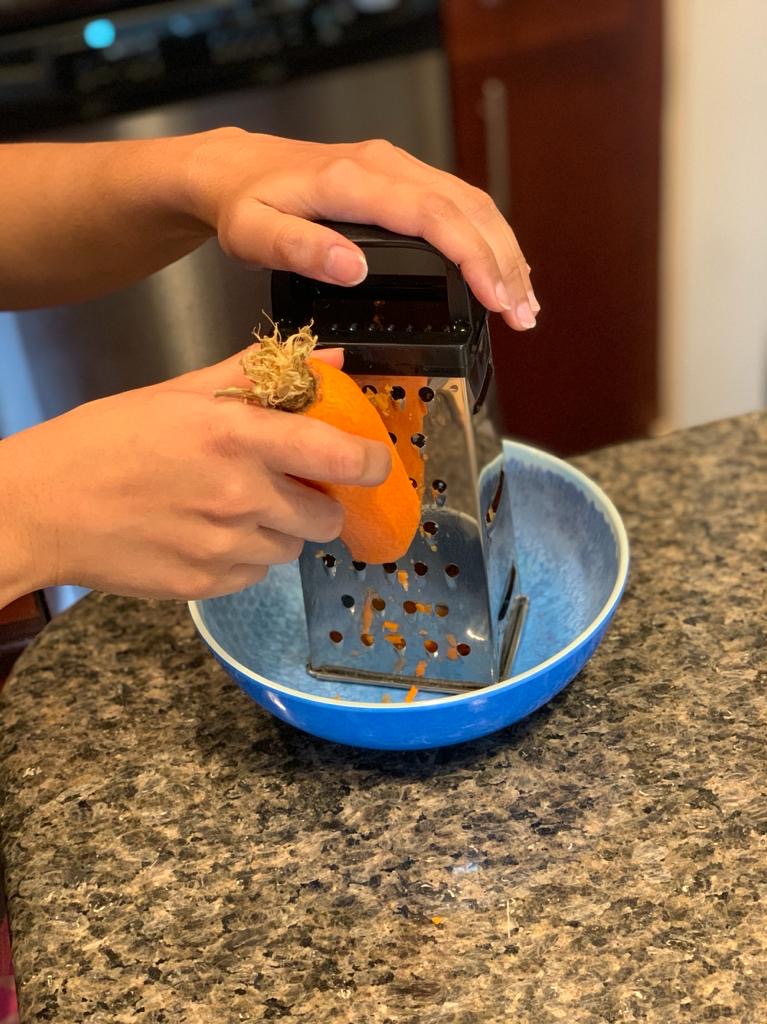
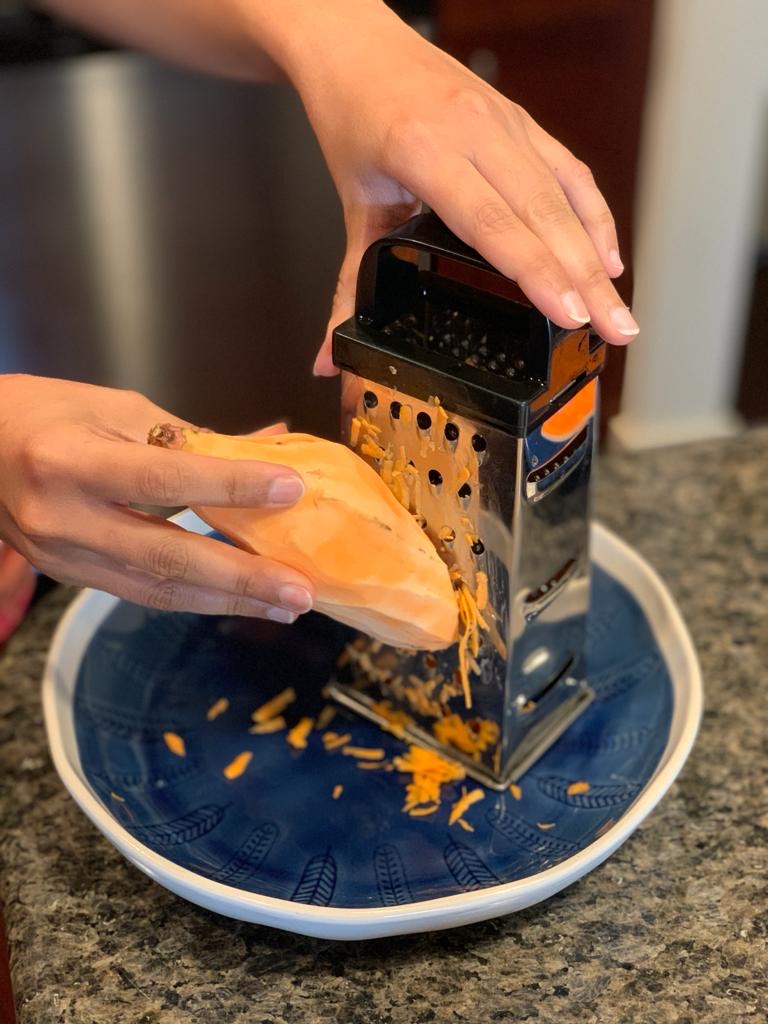
    2. In the meanwhile, begin shredding the sweet potatoes and carrots. If they are pre-shredded, great!. Chop up the onions and halve the cherry tomatoes. (Make sure to wash all the vegetables prior to chopping/shredding)
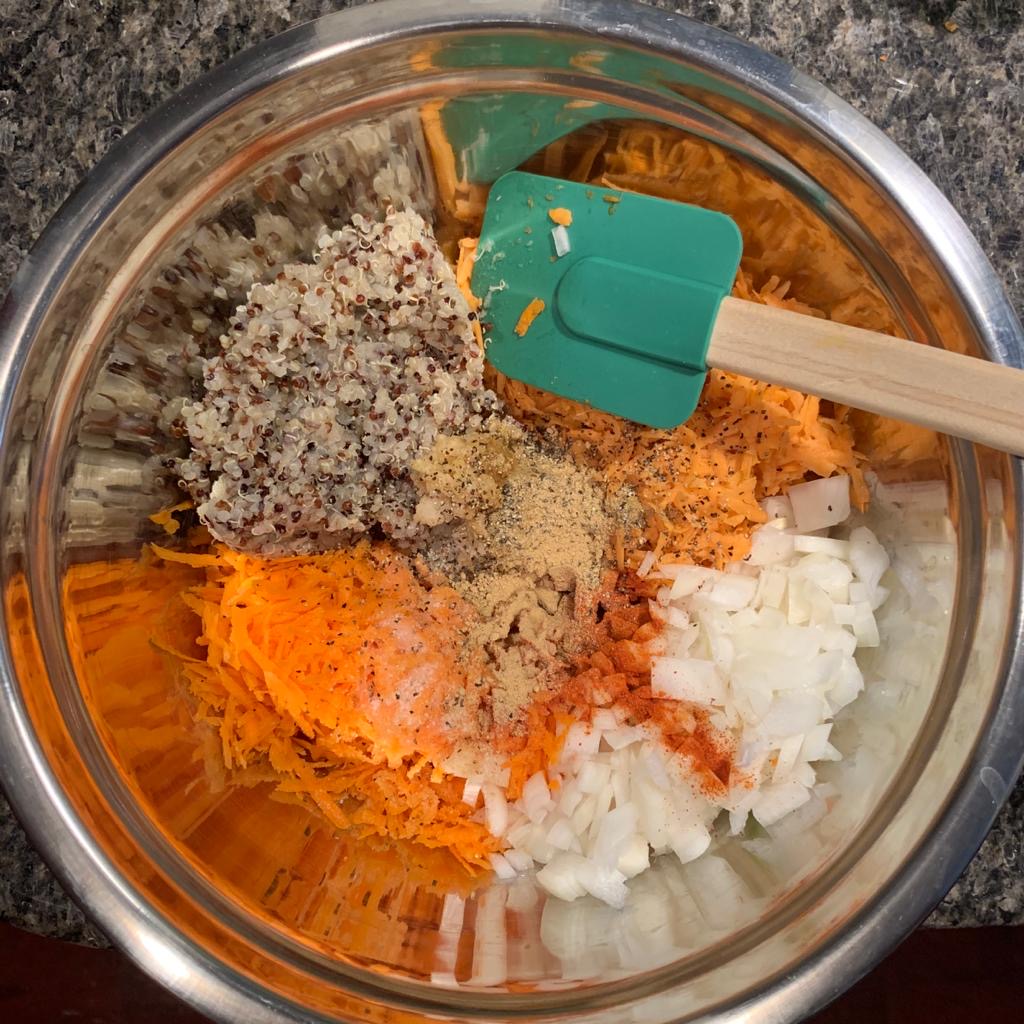
    3. In a mixing bowl, add the shredded vegetables, onions, spices & herbs, and the cooked quinoa. Also add the chickpea flour. Mix thoroughly
    4. Pre-heat the oven to 400F (200C)
    5. In the meanwhile, lay out a baking tray with parchment paper or aluminium foil as a lining. Brush some olive oil on the lining
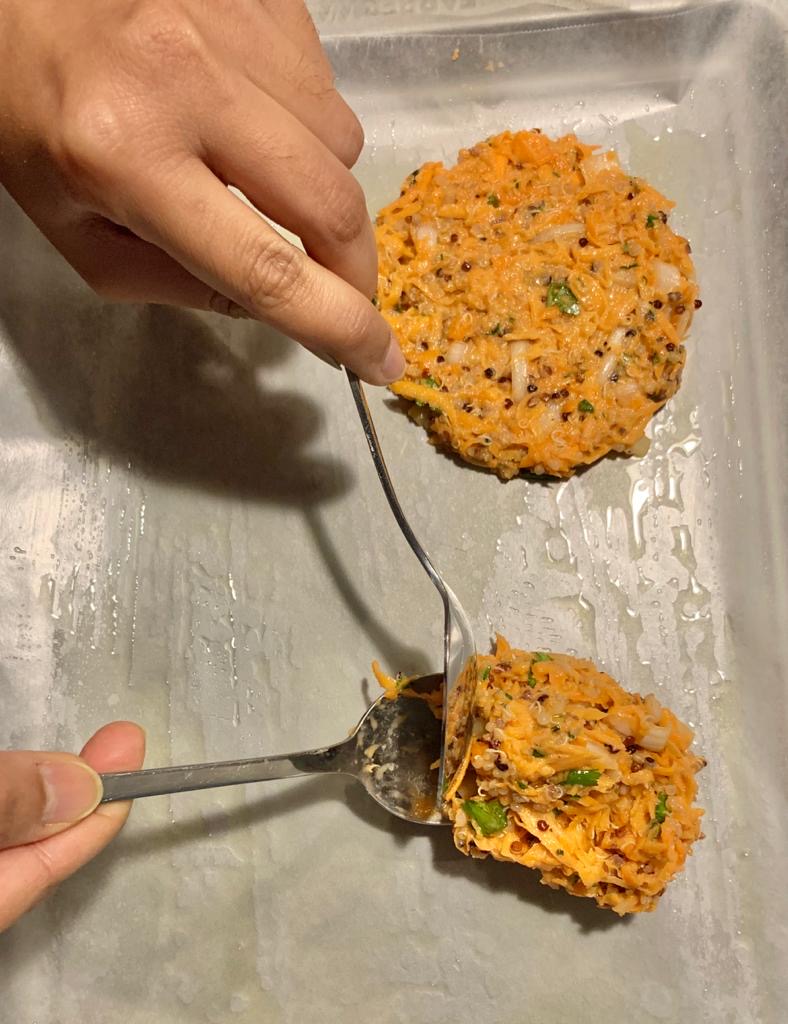
    6. Using a 1/4 cup measure, scoop the mixture onto the lined tray. Using 2 spoons, flatten the cake (don’t apply too much pressure and make it thin, maintain at least a 1/4″ thickness to the cake) and maintain its round shape. Drizzle some olive oil over the cakes
    7. Once oven is heated, place the prepared tray in the oven and bake for 15 minutes. Then flip the cakes, drizzle some more olive oil and bake for another 10 minutes
    8. Broil for additional 5 minutes. This will not only cook the cake faster due to the direct heat from the top of the oven, it will make the cakes crispier. Just watch the oven so that the cakes don’t burn
    9. While the cakes are baking, in a pan, add some olive oil and the cherry tomatoes. Cook them (on medium heat) until the skin starts to shrivel. At this point, add just 1 tsp of garlic and 1/2 tsp of red pepper flakes. Cook for an additional 5 minutes and set aside
    10. To the same pan, add some spinach and let it wilt in 2-3 minutes
    11. To assemble the cakes, place them on a plate (feel free to stack them like pancakes). Top with the spinach and chilli garlicky tomatoes

    Serving Suggestions

    • Drizzle some cucumber raita or Tzatziki sauce for a cooling component to compliment the spicy cakes OR with sriracha for an extra kick of spice
    • Any variation of sauteed green or veggies can work as a topping
    • Make an egg sandwich (with eggs the way you like them) using two cakes as substitutes for break

    You can also follow me on Instagram to be up-to-date with what is cooking my kitchen. If you like this recipe, do rate it and share your comments below. Don’t forget to post your version on Instagram using #foodformyloveblog.
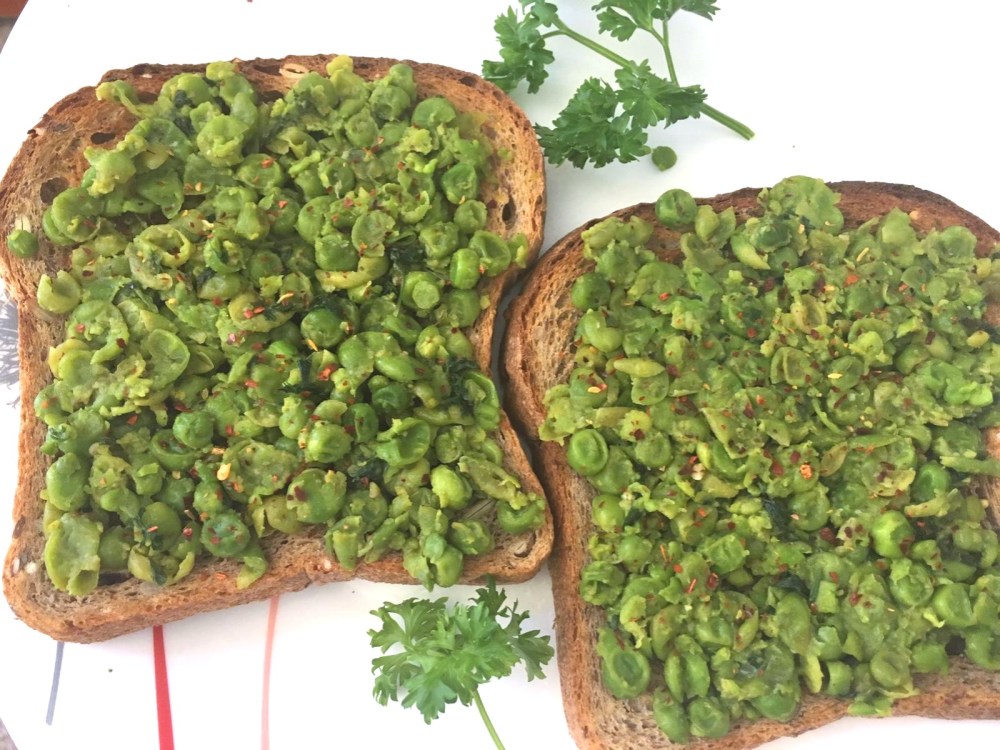
  • Lemony Pea Mash Toast

    Its time to leave the avocado toast behind and take your toast experience to the next level with the little green protein machines – peas. Yes, peas. Fresh peas means the spring has arrived. And peas are so unassuming yet are humble powerhouses of nutrition. While this recipe is focused on the protein aspect, other nutrients include fiber and inflammatory phytonutrients .

    For those looking for a non-bean or non-soy plant based protein source, this recipe is a great option. The sweetness of the green peas compliments the citrusy lemon, earthy cumin and fresh parsley. Whats best is that it literally takes 10 minutes to prepare (if you are using frozen peas, that is).

    The best part about this recipe is that the mash can be prepared in advance. It can be as chunky or as smooth as you like. So for a quick on the go breakfast, all you need is a couple of slices of crisp toast, spread the mash on it, and top with your favorite toppings. It is that easy!


    Prep time5 minutes
    Cook time10 minutes
    Serves1

    Ingredients

    Legumes

    • Green Peas – 1.5 cups (Fresh of frozen)

    Vegetables

    • Onions – 1 small, finely chopped

    Spices & Herbs

    • Roasted Jeera Powder (Cumin) – 1 tsp
    • Black Pepper – 1 tsp
    • Garlic – 1 tsp, crushed
    • Parsley – 1 tbsp, chopped
    • Lemon Juice – 1 tbsp
    • Salt – As per taste

    Oils

    • Cooking Oil – 1 tbsp

    Method

    1. In a pan, add oil
    2. Once the oil heats up, add onions and garlic. Saute until the onions turn translucent
    3. Add the peas, salt and black pepper. Let the peas cook for 3-5 minutes until they become soft
    4. Add ground roasted cumin powder. Using a fork or the back of a wooden spatula, mash the peas. Mash the peas as per your desired consistency – chunky, or a complete mash. Cook for an additional 1-2 minutes. Add this point, you add a splash of water if the mixture is sticking to the pan
    5. Turn off the heat. Add chopped parsley and lemon juice
    6. Scoop a generous amount of the pea mash onto a crisp toast, spread and enjoy!

    Serving Suggestions

    • For a kick of spice, add a sprinkle of crushed red pepper flakes
    • Top with sesame seeds or slivered almonds for a crunch
    • Top with eggs the way you like them

    You can also follow me on Instagram to be up-to-date with what is cooking my kitchen. If you like this recipe, do rate it and share your comments below. Don’t forget to post your version on Instagram using #foodformyloveblog.